How to Play With a 7-Week-Old Baby - Simple Activities, Milestones and Safe Bonding Games
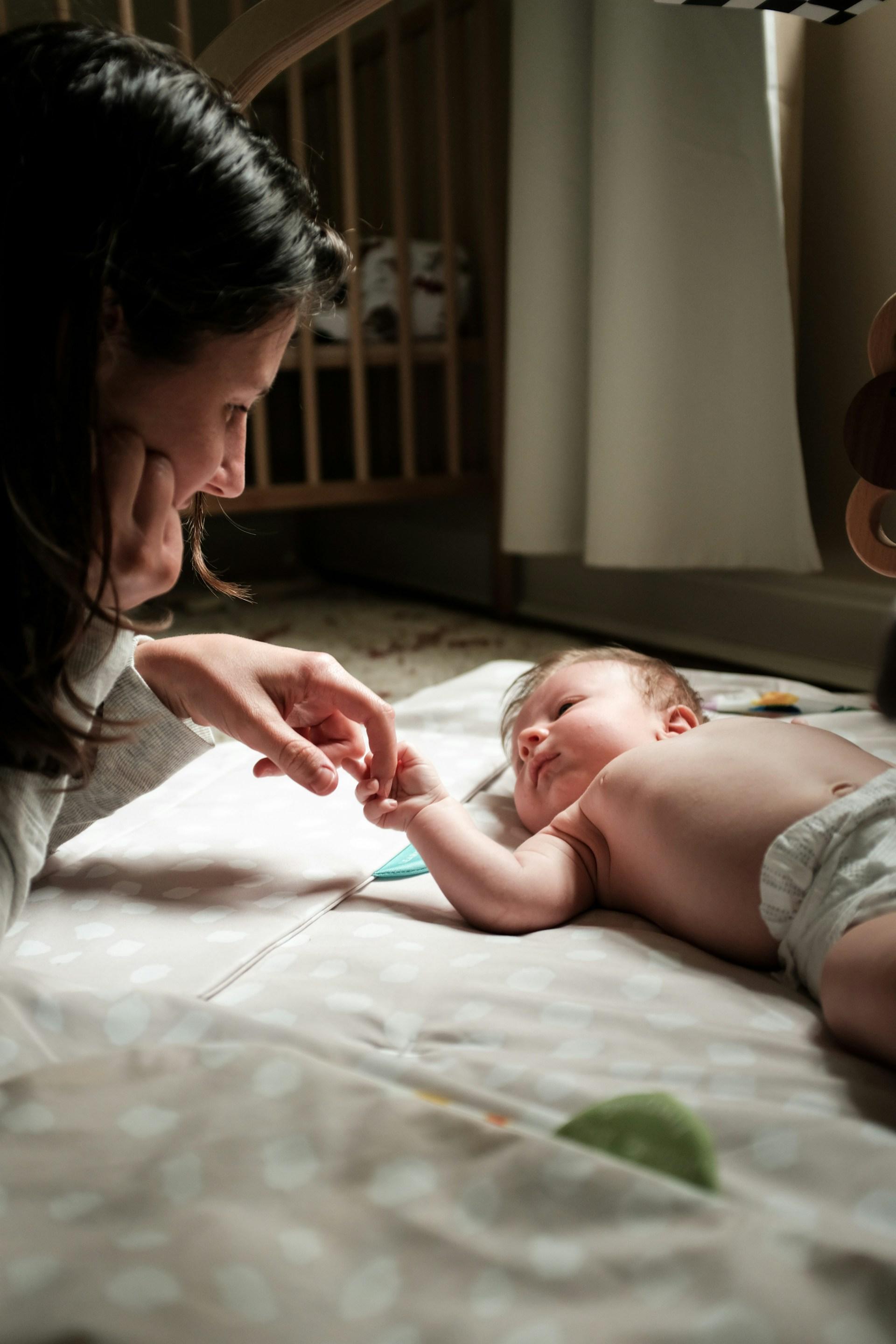
At seven weeks, your baby is no longer simply eating, sleeping, and blinking at the ceiling fan. They are starting to join the conversation in their own tiny way. A lingering gaze. A surprised little “ooh.” A hand that stays wrapped around your finger for a few seconds longer than before. These small moments make this a lovely age for gentle, playful connection.
Games and Activities with Your Baby at 7 Weeks
The best 7 week old baby activities are short, simple, and led by your baby’s mood. You do not need a toy box full of gadgets or a complicated schedule. A bright ball, a soft cloth, your voice, and your face are more than enough.
At this age, play is really about shared attention. You are helping your baby notice the world while showing them that being with you is safe, warm, and fun.
What’s New at Seven Weeks?
Every baby develops at their own pace, so do not worry if your little one is not doing every item on the same day. Still, many of the typical developmental milestones at 7 weeks begin to pop up around now.
You may notice that your baby:
- Is more alert and interactive during calm awake periods
- Tracks faces and toys more smoothly with their eyes
- Opens their hands more often instead of keeping tight fists
- Makes a wider range of coos, grunts, squeaks, and vowel-like sounds
- Seems fascinated by high-contrast objects and faces
- Has slightly longer alert windows between naps
- Lifts their head a little higher during tummy time
The awake time for a 7 week old is often still quite short, commonly around 45 to 60 minutes from waking to settling back down. That includes feeding, nappy changes, cuddles, and play. A few minutes of activity is plenty. Stop while your baby is still happy rather than waiting until they are overtired and cross.
Look for early sleepy signs: staring into space, turning away, rubbing their face, becoming fussy, or suddenly losing interest in your dazzling rendition of “The Wheels on the Bus.”
1. Introduce Bright, Bold Colours
Colour vision is still developing, but many babies are increasingly interested in bright, solid colours around this stage. This is a gentle way of introducing colors to baby without overstimulating them.
How to play
Choose one brightly coloured object, such as:
- A red ball
- A yellow rubber duck
- A blue soft block
- A green fabric square
Place it against a plain white or light-coloured background. Hold it about 20 to 30 cm from your baby’s face, which is roughly the distance between your face and theirs during a feed.
Let your baby study the object for around 30 seconds. Move it slowly from side to side and pause when their eyes follow it. Then name what they are seeing: “This is a red ball. Red!” Keep your voice calm and cheerful.
This is one of the easiest baby tracking exercises to add to your day. The slow movement gives your baby a chance to practise following with their eyes, while the simple background helps the colour stand out.
One object at a time works best. At seven weeks, a busy pile of toys can feel more like visual chaos than entertainment.
2. Practise Tiny Grips
Those little hands are beginning to open. Not all the time, of course. You may still find a determined fist tucked under your baby’s chin. But when their palm is open, you can try some gentle grasping exercises for baby.
How to play
Place a lightweight rattle, soft fabric ring, or clean wooden teething ring into your baby’s palm. Their grasp reflex may kick in immediately, and they may hold on for a few seconds.
That counts.
Let them explore the object with their hands and mouth. At this age, mouthing is not bad behaviour or a sign that they are teething early. It is one of the main ways babies investigate texture, shape, and weight.
Try saying things like:
- “You’ve got the rattle.”
- “It feels bumpy.”
- “Can you hear that little sound?”
- “You’re holding it so tightly!”
The narration may feel a bit silly at first. Say it anyway. Your voice, facial expressions, and repeated words are all part of the game.
3. Go on a Sound Treasure Hunt
Babies are becoming more aware of where sounds come from, although locating a sound source takes practice. This sweet little game encourages listening without requiring your baby to do much at all. Ideal.
How to play
Choose a gentle musical toy, a soft jingle bell toy, or a rattle with a quiet sound. Place it nearby, slightly to one side of your baby, and cover it loosely with a thin muslin cloth.
Let it play or give it a gentle shake.
Watch for your baby turning their eyes, pausing, widening their gaze, or shifting their head toward the sound. They may not find it every time. That is completely normal.
You can add a little narration: “Where is that music? Can you hear it?” Then uncover the toy and let your baby see the source.
This is lovely sensory play for newborns, combining sound, sight, and anticipation. Keep the noise soft, though. A tinny, loud electronic tune right next to your baby’s ear is not a treasure hunt. It is a lot.
4. Level Up Tummy Time
Tummy time can be a mixed bag at seven weeks. Some babies are happy to lift their heads and inspect the floor. Others object loudly within 20 seconds. Both are normal.
Short, frequent sessions often work better than trying to stretch one long session.
How to play
Use a firm nursing pillow or Boppy-style pillow to prop your baby slightly under their chest and arms. Their head should always remain clear of the pillow, and you should stay right beside them.
Place an interesting toy, a black-and-white card, or a bright object at eye level in front of them. Then get down on the floor face-to-face. Your expression is usually the most interesting thing in the room anyway.
Try a few playful lines:
- “Hello down there!”
- “Can you lift your head and see me?”
- “You did it!”
- “Let’s look at the yellow duck.”
This version of tummy time can make the position feel more manageable because your baby is slightly supported. It also gives them a reason to look up, helping build neck, shoulder, and upper-body strength.
A few minutes several times a day is great. Even one minute counts on a difficult day.
5. Try the Gentle Airplane Game
Here is one for a calm, alert baby who enjoys movement. The airplane game can feel wonderfully silly, and many babies love the close eye contact.
How to play
Lie on your back with your knees bent. Hold your baby securely, face-down across your lower legs or supported on your bent knees. Keep both hands firmly around their torso, with their head and neck well supported.
Make soft “whoosh” or “vroom” sounds. Gently bounce or move your legs by a very small amount, keeping the motion smooth and slow.
“Flying over the sofa!” “Coming in for a cuddle!” “Whoosh, little airplane!”
This playful movement can help your baby experience body position and use their developing core muscles. Keep it brief, especially after feeds. A milk-sick landing is not the goal.
Skip this game if your baby seems unsettled, has just eaten, or dislikes being on their tummy. Some babies adore it. Others make their opinion extremely clear.
6. Explore Textures Together
Texture play does not need a sensory bin, a craft shop, or an elaborate Instagram setup. At seven weeks, a few safe fabrics are fascinating enough.
How to play
During an alert period, gently brush different materials against your baby’s hands, feet, or arms. Let them touch each item if they are interested.
Try:
- Smooth silk or satin
- Soft terry cloth
- Velvet
- Cotton muslin
- A crinkly paper toy made for babies
Talk through the experience: “This one feels soft.” “Listen, this one makes a crinkle sound.” “The velvet is smooth.” Pause and watch their reaction.
Texture exploration is a simple form of sensory play for newborns. It also gives you a chance to notice what your baby enjoys. Some will stare at crinkly fabric as if they have discovered the secret of the universe. Others prefer the calm feel of a soft muslin.
How to Encourage Cooing and Conversation
Wondering how to encourage cooing? The secret is not fancy language lessons. It is taking your baby’s little sounds seriously.
When they coo, pause, smile, and answer. Copy the sound back occasionally. Then wait. This back-and-forth teaches the early rhythm of conversation.
You might say, “Oh, you said ‘oooh’! Tell me more.” It feels daft until your baby gives you another sound. Then it feels like magic.
Sing simple songs, describe what you are doing, and use your natural voice. Your baby does not need constant chatter. They need small pockets of warm attention.
Safety Notes for Every Play Session
Newborn activities should always be gentle and closely supervised. A few simple checks keep play safe:
- Stay with your baby for every activity, especially tummy time and pillow-supported play.
- Check toys regularly for loose parts, damaged seams, cracked plastic, or peeling paint.
- Avoid anything small enough to fit entirely in your baby’s mouth.
- Keep ribbons, cords, plastic bags, and loose blankets away from play areas.
- Stop if your baby becomes upset, tired, overstimulated, or turns away repeatedly.
- Place your baby on their back to sleep, even if they enjoyed tummy time while awake.
The best games for a 7 week old baby are not about reaching a milestone early. They are about tiny shared moments: your baby following a red ball, holding a rattle for the first time, or replying to your voice with a breathy coo. That is how to play with a 7 week old, really. Be close. Be curious. Have a little fun together.
We as the developers of the Erby app disclaim any liability for any decisions you make based on this information, which is provided for general informational purposes only and is not a substitute for personal medical advice.