Newborn Senses: What Babies See, Hear, Feel and Smell in the First Weeks

Those first few weeks with a newborn can feel a bit like living with a mysterious, tiny visitor from another planet. They stare past you, startle at random, calm instantly at one sound but cry at another. You might catch yourself wondering in the middle of the night: What can my baby actually see and hear right now? Do they recognise me at all?
The answer is yes. Your baby’s world is smaller and softer than yours, but it is already rich with sensation. Newborn sensory development is happening every minute, and you are at the very centre of it.
This guide will walk you through what your newborn can see, hear, feel and smell in the first weeks, and how you can gently support that development without turning it into a project or a performance. Just everyday magic.
Newborn Vision: What Can Newborns See?
The newborn vision distance: 20–30 cm
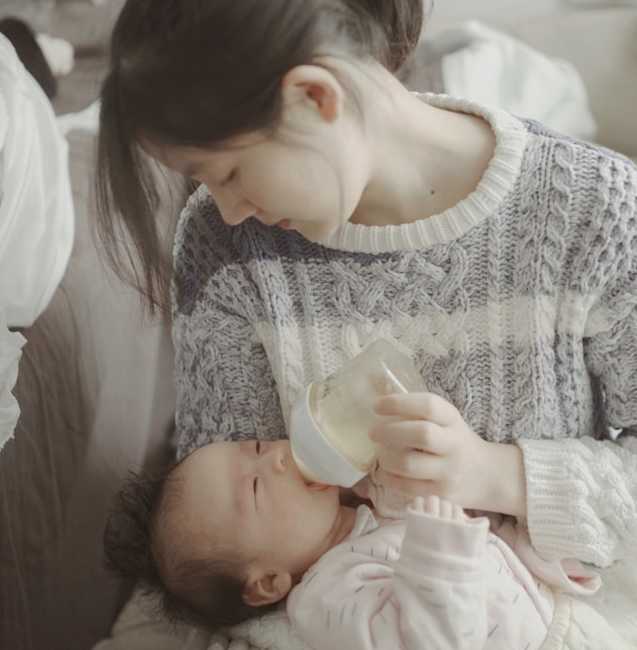
Newborn vision is surprisingly specific. In the first weeks, your baby sees best at about 20–30 cm. That is roughly the distance from your breast or chest to your face while feeding.
So when you lean in to nurse or bottle feed, your face is landing right in the sweet spot of your baby vision range. Clever design, right?
Beyond that 20–30 cm:
- Things become very blurry.
- The world looks low in detail and slightly foggy.
- They are not ready to see across the room clearly yet.
If you are wondering how well can newborns see, think of it like this: your baby can see you clearly enough to recognise big shapes and contrasts up close, but not the fine details of a bookshelf on the other side of the lounge.
High contrast is king: black, white and bold patterns
In the early weeks, babies struggle to see subtle shades. Pale pastels might look lovely in the nursery, but for a newborn, they are just gentle blobs.
What newborns see best:
- Strong contrast - black and white, or dark navy and white.
- Simple patterns - stripes, checks, big dots.
- Clear outlines - objects that stand out sharply from the background.
That is why high contrast toys for newborns, such as black and white flashcards or simple monochrome mobiles, are so popular. Your baby is not being trendy. Their visual system genuinely locks onto those bold differences more easily than soft colours.
You do not need to buy a mountain of special toys though. Everyday ideas work well:
- A black-and-white tea towel draped next to the changing mat.
- A simple pattern on your top when you feed.
- A high contrast picture propped up near the cot.
Faces first: your baby’s favourite view
Humans are wired to connect. Even as newborns, babies show a clear preference for faces over other objects.
Research from places like University College London has found that even hours-old babies look longer at face-like patterns than at random shapes. To them, a simple sketch with two dots and a line can be more interesting than a complex abstract design.
In the first weeks:
- Your baby can see your eyes, nose and mouth as large shapes.
- They will often fix on your eyes or the outline of your face.
- They might look away and then slowly come back to your face. That is not disinterest, just their brain taking a break.
This is one of the easiest ways to support newborn sensory development:
- Hold your baby face-to-face at about 20–30 cm.
- Let them look at you while feeding, burping or cuddling.
- Pause and give them time. Long, slow gazes are tiring work for them.
Newborn tracking objects: following slow movement
In the first week or two, many babies can start to show very basic newborn tracking of objects.
They cannot follow something zipping across their field of view. But a slow, gentle movement? That is possible.
Try this:
- Hold a high contrast card or your face about 20–30 cm from your baby.
- Gently move it a few centimetres to one side.
- Watch to see if their eyes make a small, jerky effort to follow.
Newborns often track best:
- Horizontally, from side to side.
- At close range, not too high or too low.
- For a short time only, then they get tired.
If your baby does not track every time, do not panic. They are still adjusting. Think of this as a soft invitation, not a test they must pass.
When do babies see colours?
Colour vision arrives gradually. At birth, babies see the world mostly in shades of grey, black and white, with a tiny bit of colour sensitivity starting to switch on.
What we know about when babies see colours:
- Red tends to be the first colour they can notice more clearly.
- Over the next weeks, they begin to detect other strong colours like green and yellow.
- Pastels and very similar shades are harder for them to separate early on.
So in the early weeks, if you want your baby to see colour:
- Use strong red objects or books.
- Choose a toy with bold blocks of colour rather than soft, blended tones.
There is no need to rush colour learning. It unfolds on its own. Your job is simply to offer a world that is not all beige and barely-there tones.
Newborn Hearing: What Can Newborns Hear?
Hearing is well developed at birth
Unlike vision, newborn hearing arrives surprisingly ready. Babies have been listening in the womb for months, through layers of fluid and your own body.
Right from birth, most newborns can:
- Hear voices and everyday sounds.
- Notice changes in tone and rhythm.
- React differently to gentle versus harsh noise.
So while their eyesight is still catching up, their ears are already helping them make sense of this new world.
Do newborns recognise mother’s voice?
Yes, very strongly. If you have ever asked “Do newborns recognise mother’s voice?”, the answer is almost certainly.
You have been talking, laughing, and living your life throughout pregnancy. Your baby has been hearing you through the muffled, underwater world of the womb. By the time they are born, your voice is already a familiar soundtrack.
In the first weeks:
- Your baby will often quiet or turn towards your voice.
- They may settle faster for you than for others, just because you sound like home.
- Non-birthing parents and partners also become recognised quickly with regular talking and singing.
Use this to your advantage:
- Talk to your baby when you change nappies or walk around the house.
- Sing the same song at bedtime to build a comforting association.
- Narrate simple things: «I’m putting on your vest now, here comes your left arm.»
It may feel odd at first, but your voice is one of the most powerful tools in newborn development.
Startles and the newborn startle reflex (Moro reflex)
You might notice your baby suddenly fling their arms wide, open their hands, and then pull everything back toward the chest, sometimes with a cry. That is the newborn startle reflex, also called the Moro reflex.
Loud or sudden sounds often set it off:
- A door slamming.
- A plate clinking unexpectedly.
- A dog barking nearby.
This reflex:
- Is completely normal.
- Peaks in the first weeks, then gradually fades over a few months.
- Shows that your baby’s nervous system is responding to the outside world.
To help:
- Avoid very sudden, extreme noises near your baby if you can.
- Swaddling (done safely, not too tight and keeping hips free) can help some babies feel more secure.
- Gently place a hand on their chest or wrap your arms around them when you sense a startle coming.
Why babies prefer high‑pitched voices
You might hear yourself slipping into a slightly higher voice when you talk to your baby. Or you overhear someone using classic “baby talk” and wonder why we all seem to do it without thinking.
Babies actually prefer high‑pitched voices. Studies from universities in the UK and Europe have found that newborns pay more attention to speech that is:
- Slightly higher in pitch.
- Sing-song and rhythmic.
- Warm and emotionally expressive.
This style of talking, sometimes called “parentese” or infant-directed speech, helps babies:
- Notice the patterns of language.
- Tell the difference between happy and upset tones.
- Feel emotionally connected to the speaker.
So do not feel silly if you find yourself saying, «Ooh, look at those tiny toes!» in a voice you barely recognise. That tone of voice is not just sweet. It supports newborn hearing and early communication.
Calmed by familiar sounds: heartbeat and white noise
Life in the womb is not silent. It is full of whooshing blood, digestive gurgles, the rhythmic beat of your heart, and the muffled rumble of the outside world.
Newborns are often calmed by sounds that echo this:
- A steady heartbeat (on your chest, or even a recording).
- White noise, like a fan, a gentle rain sound, or a soft white noise machine.
- The rhythm of your breathing.
These sounds:
- Create a kind of “audio cocoon”.
- Help some babies fall asleep and stay asleep.
- Mask sudden environmental noises that might trigger that startle reflex.
If you use white noise:
- Keep the volume low, about the level of a normal conversation.
- Place the device away from the cot, not right beside your baby’s ear.
- Choose a constant, gentle sound, not one that jumps in volume.
Touch: The Most Developed Sense at Birth
Of all the senses, touch is the one your newborn is most ready to experience in full colour from day one.
They may not see you clearly yet, but they feel you. Right down to the temperature of your skin, the pressure of your hand on their back, and the curve of your arms around them.
The power of skin‑to‑skin contact
You have probably heard midwives and health visitors talk about “skin‑to‑skin”. There is a reason they go on about it.
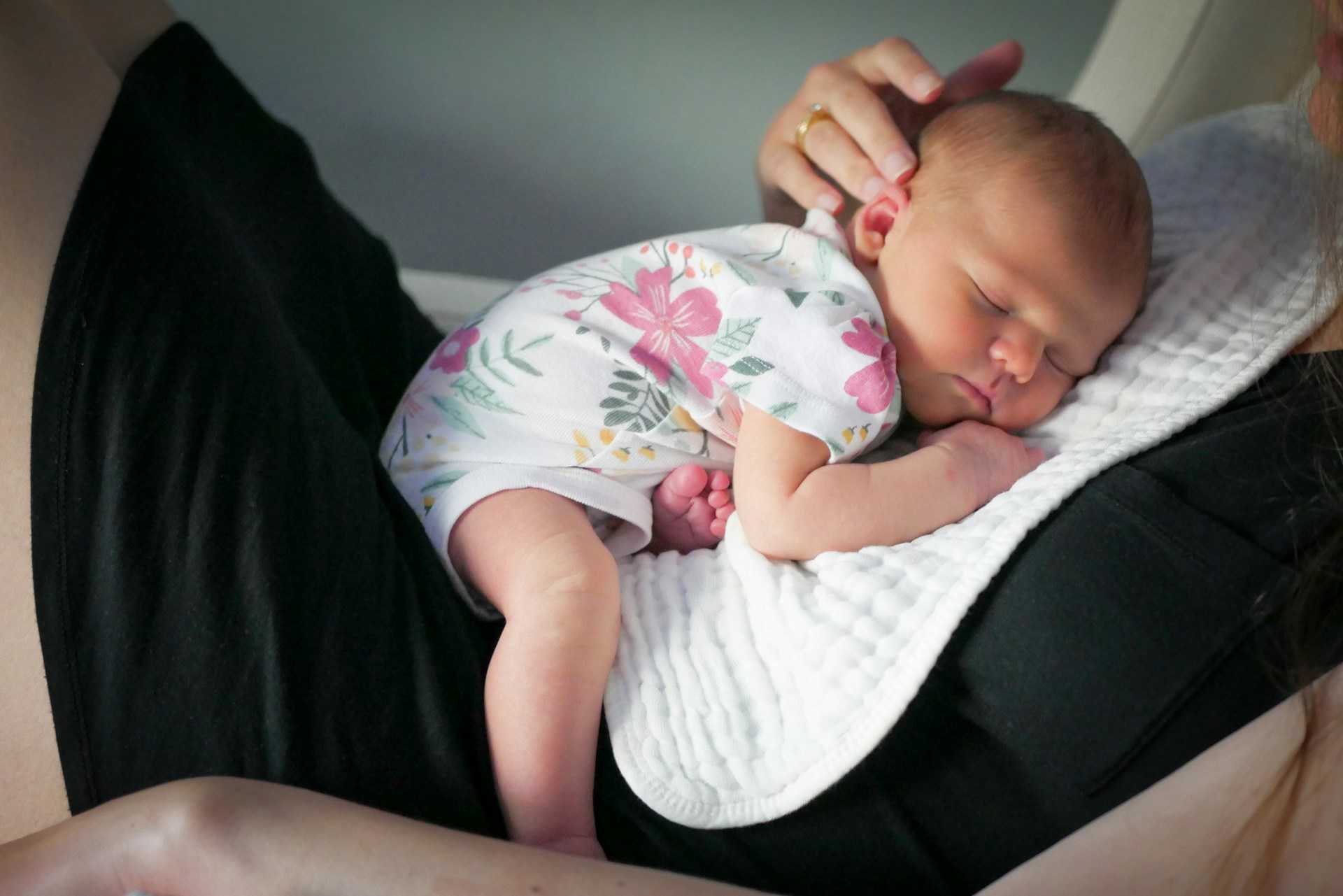
For a newborn, skin‑to‑skin contact:
- Regulates body temperature and heart rate.
- Helps stabilise breathing.
- Can support breastfeeding and milk supply.
- Reduces stress hormones for both baby and parent.
- Deepens bonding without you having to “do” anything fancy.
Practical ideas:
- Hold your baby in just a nappy against your bare chest, with a blanket over both of you.
- Let partners and non-birthing parents do the same. Their touch is just as powerful.
- Enjoy skin‑to‑skin not only immediately after birth but also on ordinary afternoons at home.
For many families, this is where some of the most peaceful, grounded moments of the early weeks happen.
Smell: Recognising Mother’s Scent
Newborns have a surprisingly sharp sense of smell. Long before they can focus clearly on your face, they can recognise your scent.
This sense of smell helps with:
- Finding the breast in breastfed babies.
- Recognising who is holding them.
- Feeling safe and settled.
You might notice:
- Your baby calms faster in your arms than in someone else’s.
- They turn their head toward your chest or armpit area, where your natural scent is strongest.
- A worn T‑shirt of yours can sometimes soothe them more than a freshly washed one.
You do not need to stop washing to maintain this bond, of course. Just remember that strong perfumes, very heavily scented lotions, or lots of air fresheners can sometimes overwhelm your baby’s more sensitive nose.
Simple Ways to Support Newborn Sensory Development
You do not need special classes, an app, or a suitcase of gadgets to support newborn sensory development. Everyday contact with you and your home is enough.
Here are gentle, realistic ideas that fit easily into normal life.
1. Face‑to‑face time at feeding distance
Use that newborn vision distance of 20–30 cm whenever you can.
- Hold your baby where they can see your face clearly.
- Keep the room light enough for them to see you but not glaring.
- Pause to look back at them rather than always looking at your phone or the TV.
Even a few minutes of quiet, face‑to‑face time during each feed can help:
- Strengthen your bond.
- Encourage your baby to explore expressions.
- Support early social and emotional development.
2. Use high contrast cards and simple patterns
To gently encourage newborn vision:
- Place high contrast cards near the changing area or cot.
- Choose black and white books or toys with clear shapes.
- Wear patterned tops now and then, especially ones with bold stripes or blocks.
A quick idea: tape a black-and-white postcard at the side of the cot where your baby sometimes stares into space. You might notice them returning to it again and again for short “study sessions”.
3. Talk and sing all day long
Your voice is the main driver of newborn hearing and early language development.
Easy ways to weave it in:
- Narrate what you are doing: «Now I’m warming your milk», «We’re going upstairs for your bath».
- Sing the same lullaby at naps and bedtime.
- Use natural “baby talk” - the higher, sing-song tone that babies adore.
Remember, no one is handing out awards for perfect pitch. Your baby prefers your slightly wobbly, familiar song to a flawless stranger on a recording.
4. Offer plenty of skin‑to‑skin cuddles
For touch and emotional security:
- Set aside at least one skin‑to‑skin cuddle a day if you can.
- Pop your baby down your top when you are resting on the sofa.
- Snooze together safely on your chest when another adult is keeping an eye on you both.
Even short sessions help. It is not all or nothing.
5. Use calm, familiar sounds to soothe
To support your baby’s adjustment to the outside world:
- Try white noise during naps or at bedtime.
- Hold your baby against your chest so they hear your heartbeat.
- Hum or gently “shhh” in a steady, rhythmic pattern.
These sounds echo the womb and tell your baby: «You are safe. You are held.»
Trusting the Quiet Magic of the First Weeks
When you are exhausted, it is easy to feel that you should be “doing more” for your baby - more stimulation, more baby classes, more of everything.
In reality, those first weeks are about simple, repeated moments:
- Your face, at that perfect 20–30 cm.
- Your voice, rising just a bit higher and softer when you say their name.
- Your skin against theirs.
- The familiar scent of you, wrapped around them like a blanket.
That is how newborn vision, baby vision, newborn hearing, touch and smell slowly knit together into a secure sense of the world.
So the next time you are up at 3 am and your baby is staring somewhere near your chin, remember: they are not just staring into space. They are quietly studying the person who is, quite literally, their whole universe.
And you are doing far more for their development than you probably realise.
We as the developers of the Erby app disclaim any liability for any decisions you make based on this information, which is provided for general informational purposes only and is not a substitute for personal medical advice.