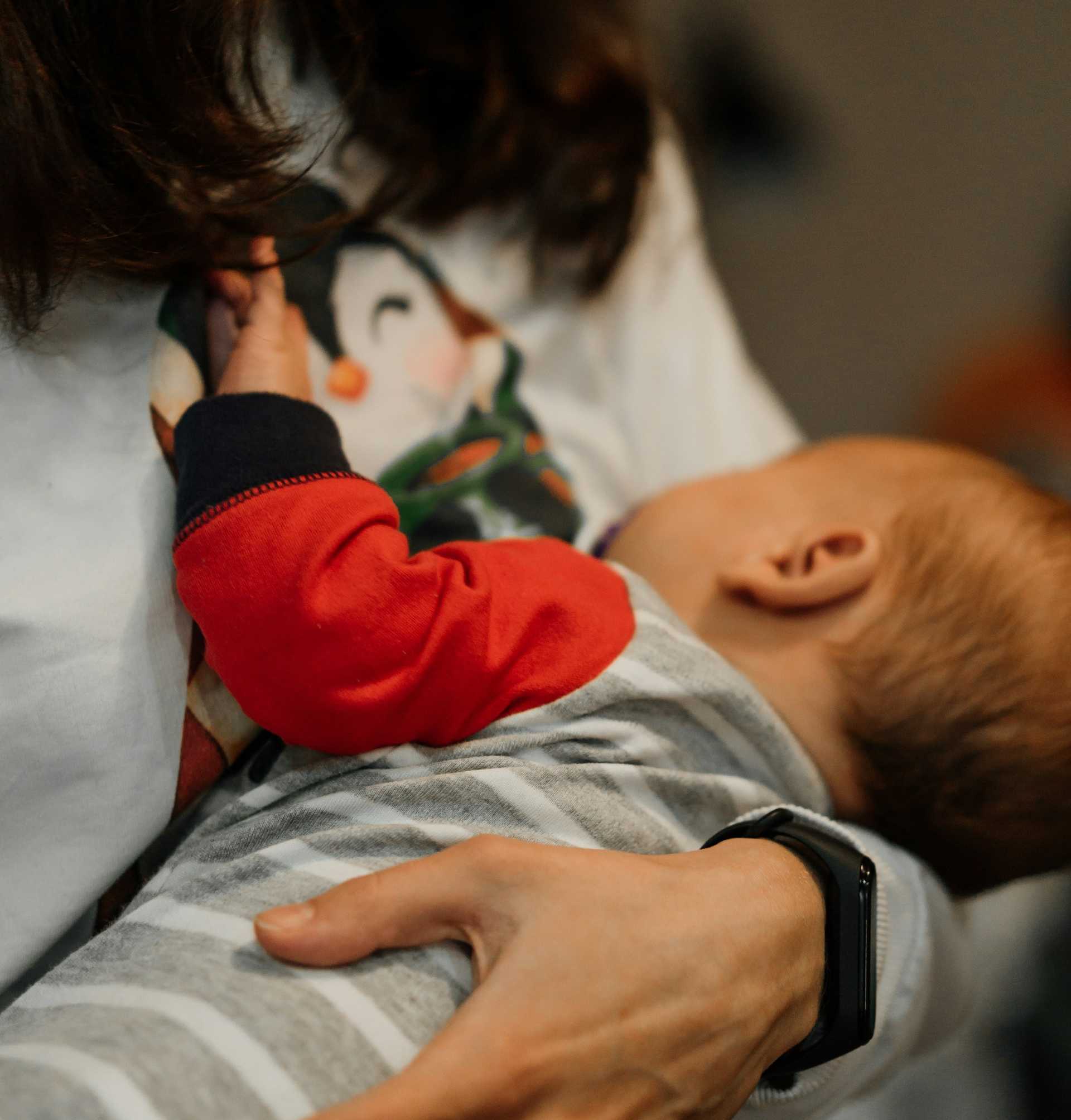
Understanding the 3-4 Week Growth Spurt - Why Your Newborn Is So Fussy and How to Cope

The third or fourth week with a newborn can feel like everything is suddenly going wrong. Yesterday your baby fed, slept, and gave you the odd sleepy smile. Today? Constant crying, hanging on the breast or bottle, refusing to be put down, sleeping in tiny snatches or, weirdly, much more than usual.
You might be wondering: Why is my baby so fussy all of a sudden? Did I mess something up? Is my milk not enough?
Take a breath. This is almost certainly a baby growth spurt - a very normal phase that actually means good things are happening.
Let’s unpack what is going on in those intense days around the 3–4 week growth spurt and how you can get through it with a bit more confidence (and hopefully a little less panic).
What is a growth spurt or developmental leap?
When people talk about a newborn growth spurt, they tend to picture only physical growth: getting longer, gaining weight, outgrowing those tiny vests you just bought. That does happen. But that’s only half the story.
In the first weeks, babies go through periods of:
- Rapid physical growth - length, head circumference, body weight.
- Huge neurological growth - the brain is building new pathways and connections at a staggering speed.
These short, intense windows are often called growth spurts or developmental leaps. During a leap, your baby’s brain is learning to process the world in a new way. It is like someone suddenly turned up the brightness and volume on life.
That kind of change is a lot. So babies react in the only way they know how: they cry more, cling more, feed more, and generally seem «not themselves».
The good news?
These phases are temporary, and each one usually ends with your baby showing off a new skill or being just a little more alert and interactive.
The 3–4 week growth spurt: what is special about this one?
Around 3 weeks old, sometimes closer to 4 weeks, many parents notice a sudden shift and start asking, «Why is my baby fussy all the time now?»
If you are Googling things like:
- newborn fussy at 3 weeks
- baby suddenly fussy 3 weeks old
- cluster feeding 3 weeks
- feeding more newborn 3 weeks
you are definitely not alone.
This 3–4 week growth spurt is one of the first big leaps after birth. Your baby is:
- Recovering from the huge transition of being born.
- Adjusting to life outside the womb.
- Starting to notice sights, sounds, and sensations more clearly.
All that extra awareness, plus physical growth, often creates a perfect storm of fussiness.
Signs of a growth spurt in a newborn
Every baby is different, but there are some classic signs of a growth spurt in a newborn around 3–4 weeks. You might see all of them, or just a few.
1. Increased fussiness
Your usually calm baby might:
- Cry more, especially in the evenings.
- Be harder to settle after feeds.
- Seem upset but not obviously hungry, gassy, or unwell.
Sometimes parents describe it as their baby suddenly being «grumpy» or «unhappy» for no clear reason.
2. Wanting to feed constantly
This is a big one.
Babies going through a baby growth spurt often cluster feed - feeding in short bursts very frequently, sometimes with barely 20–30 minutes between feeds.
If you are breastfeeding, this is not a sign that you don’t have enough milk. It is your newborn’s clever way of:
- Stimulating your body to increase milk supply.
- Getting extra calories to fuel rapid growth.
- Comforting themselves as their world feels more intense.
If you are bottle feeding, you might notice your baby finishes whole bottles then still seems interested in more. They may also take smaller, more frequent feeds.
The key point:
This is about growth, not a failure of your body or your feeding choices.
3. Sleeping more… or less
Sleep during a growth spurt can go either way:
- Some babies sleep longer and deeper, as if their bodies are using that downtime to grow and process new information.
- Others become more restless, wake more often, or only sleep well in your arms.
So if you see sleep changes in a growth spurt newborn, it does not always mean something is wrong. The pattern might simply be different for a few days.
4. Extra clinginess
You might be asking:
- Why is my newborn clingier all of a sudden?
- Why can’t I put them down without tears?
During a developmental leap at 3 weeks, babies often want constant contact. They may only settle on your chest, in a carrier, or right next to you.
From the outside it looks like «spoiling» or «bad habits». In reality, it is your baby’s nervous system saying, «I’m overwhelmed, please keep me close, I feel safer there.»
5. General “off” behaviour
Other small signs of a 3 week growth spurt can include:
- Shorter naps, or naps only in motion (pram, car, sling).
- Feeding well one minute, fussing at the breast or bottle the next.
- Staring at lights, faces, or contrasting patterns more than before.
- Occasional unsettled crying in the evenings, sometimes called the “witching hour”.
If your baby also has a fever, is hard to wake, seems floppy, has fewer wet nappies than usual, or you just have a gut feeling something is wrong, call your GP, midwife, health visitor, or NHS 111 for advice. Growth spurts are normal, but illness can happen at the same time, so trust your instincts.
How long do growth spurts last in a newborn?
The intense phase of a newborn growth spurt is usually short.
Most parents find that the worst of the 3–4 week growth spurt lasts:
- 2 to 4 days, or
- sometimes up to a week.
It can feel never-ending when you are in it (especially at 3 a.m. when you have had three hours of broken sleep), but it really does pass.
Many parents notice that:
- One day the baby is feeding nonstop and crying whenever they are put down.
- A few days later, things suddenly feel a bit easier.
- The baby seems more alert, more engaged, and sometimes physically bigger almost overnight.
Why does this 3–4 week growth spurt happen?
Your baby is not being “naughty” or “difficult”. There are real, biological reasons for this behaviour.
1. The brain is making new connections
In the first month, your baby’s brain is building neural pathways incredibly fast. Around the developmental leap at 3 weeks, your newborn starts to:
- Notice patterns in light and dark a bit more.
- React differently to sounds and touch.
- Become more aware that they are separate from you, which can feel unsettling.
This surge in brain activity can make them fussier and clingier. They are processing a lot.
2. The body is growing rapidly
During a growth spurt, babies often:
- Gain weight quickly.
- Stretch out in length.
- Need more calories to support this growth.
That is why there is so much feeding more in newborns at 3 weeks. They are stocking up on energy so their bodies can do the work.
3. Sudden awareness of surroundings
At birth, babies are quite sleepy and easily overwhelmed. By around 3–4 weeks, their senses start to sharpen.
Your baby might:
- Be more easily stimulated by lights, noise, or visitors.
- Struggle to calm down in busy environments.
- Need more soothing to fall asleep.
What looks like random fussing often makes sense when you remember that to your baby, the world just became louder, brighter, and more complex.
The Wonder Weeks: a quick look at leaps
You might have heard of The Wonder Weeks, a popular concept that describes common developmental leaps in babies during the first 20 months.
According to this framework:
- Leap 1 happens around week 5.
- It is sometimes called the leap of “changing sensations”.
- Babies begin to notice their body and the world more clearly.
The 3–4 week growth spurt you are going through might overlap with the beginning of this change, or you might see a second fussy spell a week or so later. Not every baby follows the Wonder Weeks pattern exactly, but many parents find it reassuring to know these phases are expected.
Whether or not you follow the Wonder Weeks app or book, the key idea holds:
Your newborn is not just growing physically, they are growing mentally, and that can temporarily turn life upside down.
How to cope with a 3–4 week growth spurt
You cannot stop a growth spurt, and you do not need to. It is a healthy part of development. But you can make it more bearable for yourself and your baby.
1. Feed on demand (this is not a supply problem)
If your baby is showing feeding cues - rooting, turning their head, sucking on fists, fussing at the chest - offer the breast or bottle.
For breastfed babies:
- Frequent feeding helps boost your milk supply to match your baby’s new needs.
- It is completely normal for your baby to seem “always hungry” during these days.
- Cluster feeding in the evenings around 3 weeks is extremely common.
For formula-fed babies:
- They may want an extra ounce or more frequent bottles for a few days.
- Talk to your midwife, health visitor, or GP if you are unsure how much to increase feeds.
Try to reframe the thought:
- From: «My baby is feeding non-stop, I must not have enough milk.»
- To: «My baby is increasing my supply because they are growing. This is exactly how their body is meant to work.»
2. Extra skin-to-skin contact
Skin-to-skin is not just for the first hour after birth. During a growth spurt, it can help:
- Regulate your baby’s temperature and heart rate.
- Calm their nervous system.
- Improve feeding, both breast and bottle.
- Lower your own stress and heart rate too.
Unbutton your top, place your baby on your bare chest in just a nappy, and cover you both with a light blanket. Your partner can do this as well - babies do not mind whose chest they are on, as long as they feel safe and warm.
3. Tag-team with your partner or support person
You were never meant to do this alone.
If possible:
- Take turns holding, rocking, or wearing the baby.
- Give each other short breaks for a shower, a walk, or a quick nap.
- If you are breastfeeding, your partner can handle burping, nappy changes, and settling between feeds.
Solo parent? Is there a friend, grandparent, or neighbour who could drop off a meal, do a quick supermarket run, or hold the baby while you eat with both hands? Many people want to help but are not sure how - sometimes you just need to ask very specifically.
4. Lower the bar at home
For a few days:
- Forget about a spotless house.
- Keep meals simple, or lean on ready meals and takeaways if that is possible for you.
- Say no to non-essential visitors, or ask them to bring food or help with chores.
Your job right now is to keep your baby fed and comforted and to look after yourself enough to keep going. That is more than enough.
5. Use soothing tools that work for you
Different babies respond to different calming strategies. You might try:
- Rocking or swaying while holding your baby.
- Wearing them in a sling or carrier so you have your hands free.
- White noise (apps, fans, or specific machines).
- A dark, quiet room if they seem overstimulated.
- A warm bath together, if you are both up to it.
You are not creating bad habits by soothing a 3-week-old. You are teaching their brain that the world is safe and that comfort is available.
6. Be kind to yourself
Sleep-deprived, touched-out, emotionally fragile? That is not weakness. It is the reality of early parenthood.
If you can:
- Drink water at each feed.
- Eat something with protein and carbs, even if it is just toast with peanut butter.
- Tell someone you trust how you are really feeling.
If your mood feels very low, you are crying a lot, or you feel numb or disconnected from your baby, speak to your GP or health visitor. Postnatal depression and anxiety are common and treatable. You deserve support too.
What happens after the growth spurt?
Here is the encouraging bit.
Once the 3–4 week growth spurt passes, many parents notice their baby:
- Feeds more efficiently.
- Has slightly more predictable awake and sleepy periods.
- Makes more eye contact.
- Starts to show early «skills» like tracking your face, responding to voices, or making more varied noises.
It can feel like your baby went into a tunnel of fussiness and came out more grown up.
So if you are currently holding a crying, clingy, endlessly hungry newborn and wondering if you will ever drink a hot cuppa again, remember:
- This is temporary.
- It is a sign of development, not failure.
- You are not doing anything wrong.
- Your baby is not broken or «difficult» - they are growing fast.
One feed, one cuddle, one nap at a time, you will come out the other side of this 3–4 week growth spurt with a slightly bigger, slightly more aware, and still absolutely unique little human.
And you? You will be a parent who just survived one of the first big leaps. That is no small thing.
We as the developers of the Erby app disclaim any liability for any decisions you make based on this information, which is provided for general informational purposes only and is not a substitute for personal medical advice.