When to Exercise After Birth: A Safe, Practical Postpartum Plan
Your body has just done something enormous. Whether you had a straightforward vaginal birth, an assisted delivery, or a caesarean section, recovery is not a race back to your old routine. The question is not simply when to exercise after birth, but how to rebuild strength in a way that supports healing, energy, feeding, sleep, and your changing body.
The short answer: when can you exercise after birth?
For many new mums, gentle movement can begin very soon after delivery, sometimes on the first day. But the type and intensity of postpartum exercise matters far more than the date on the calendar.
A general guide looks like this:
- Day 1 onwards: short, easy walks around the house or hospital ward, if you feel able and your maternity team is happy for you to do so.
- Week 1 onwards: gentle pelvic floor exercises and deep breathing can usually begin, even after stitches or a C-section, provided they do not cause pain.
- Around 6 weeks after a vaginal birth: many women can gradually return to moderate postnatal exercise after their postnatal check, assuming bleeding has settled and there are no complications.
- Around 8 to 12 weeks after a C-section: exercise after C-section often needs a slower return because abdominal surgery takes time to heal. Your GP, midwife, obstetrician, or women’s health physiotherapist can advise on your personal timeline.
- Several months after birth: running, jumping, heavy weights, intense HIIT sessions, and other high-impact postpartum workouts should wait until your pelvic floor and core are ready.
These are broad guideposts, not deadlines. A difficult birth, significant tearing, prolapse symptoms, infection, high blood pressure, pelvic pain, or postnatal complications can all change the plan. If you are unsure, ask your GP, midwife, health visitor, or a pelvic health physiotherapist.
Start with walking after birth
Walking after birth is one of the safest ways to reintroduce movement. It gets circulation going, can ease stiffness, and gives you a little fresh air after long days indoors with a newborn.
At first, think tiny. A five-minute stroll to the end of the road may be plenty. Some days, walking around the kitchen while the kettle boils is all you have in you. That counts.
Build up gradually:
- Start with 5 to 10 minutes at an easy pace.
- Notice how your body feels later that day and the next morning.
- Add a few minutes every few days if there is no increase in pain, bleeding, heaviness, or exhaustion.
- Choose flat routes before tackling hills, uneven paths, or buggy walks that feel like pushing a small tank uphill.
After a C-section, standing tall may feel uncomfortable initially. Hold a pillow gently against your incision when coughing, laughing, or getting up from bed. Rolling onto your side before pushing yourself upright is often more comfortable than sitting straight up.
Pelvic floor first: the foundation of postpartum recovery
Your pelvic floor has supported the weight of pregnancy for months. During a vaginal delivery, those muscles also stretch significantly. Even if you had a C-section, pregnancy itself affects the pelvic floor, so pelvic floor exercises should be part of nearly every postnatal recovery plan.
These muscles support the bladder, bowel, and uterus. When they are weak, you may notice leaking urine when coughing, running, or lifting the car seat. Some women also feel a dragging or heavy sensation in the vagina, especially later in the day. That is your cue to slow down and get assessed.
How to do Kegels after birth
Kegels after birth are simple, but technique matters.
- Sit or lie comfortably and relax your shoulders, tummy, bottom, and thighs.
- Imagine you are trying to stop the flow of urine and prevent passing wind at the same time.
- Gently squeeze and lift the muscles inside your pelvis.
- Hold for 5 seconds.
- Release completely for 5 seconds.
- Repeat 10 times, aiming for 3 sets a day.
As your strength improves, gradually build towards holding each squeeze for up to 10 seconds. You can also add quick squeezes: tighten and release rapidly 10 times.
Do not practise by regularly stopping urine mid-flow. That can interfere with normal bladder emptying. It is fine to use that sensation once to identify the muscles, then do your pelvic floor exercises away from the toilet.
A useful trick? Link them to habits you already have. One set while feeding the baby, one while brushing your teeth, one during the evening telly. Small repetitions add up.
Check for diastasis recti before doing core work
Pregnancy commonly creates a separation between the two sides of the rectus abdominal muscles. This is called diastasis recti, or abdominal separation. It is not a failure of fitness, and it does not mean your stomach is “ruined”. It simply means your abdominal wall needs time and the right kind of support.
How to do a diastasis recti check
You can try a basic check at home after the early days of recovery:
- Lie on your back with knees bent and feet flat on the floor.
- Place two or three fingers across the middle of your tummy, first just above the navel.
- Gently lift your head and shoulders a little, as though starting a tiny crunch.
- Feel for a gap between the abdominal muscles.
- Repeat at the navel and just below it.
If the gap feels wider than two finger widths, or your tummy forms a ridge or dome when you sit up, cough, or exercise, your deep core may need more attention. Finger-width checks are only a rough guide, though. The tension and function of the tissue matter too.
Avoid crunches, sit-ups, full planks, and intense abdominal workouts until the separation is improving and you can move without bulging or doming through the centre of your stomach. A pelvic health physiotherapist can give the most accurate assessment.
Gentle exercises that can help close the gap
The aim is to retrain your deep abdominal muscles, especially the transverse abdominis, rather than hammering the outer “six-pack” muscles.
Try these postpartum recovery exercises:
- Deep breathing with abdominal connection: Lie on your back or side. Breathe in and let your ribs expand. As you breathe out, gently draw your lower tummy inward, as if tightening a wide belt around your waist. Keep it subtle.
- Pelvic tilts: Lie with knees bent. Exhale and gently tilt your pelvis so your lower back eases towards the floor, then release.
- Heel slides: Start on your back with knees bent. Engage your deep tummy gently, then slowly slide one heel away and back without your abdomen doming.
- Marching: With both feet on the floor, lift one foot a few centimetres, lower it, then switch sides. Keep your pelvis steady.
- Glute bridges: Press through your feet and lift your hips slowly, squeezing your bottom. Stop if you feel pressure in the pelvis or a bulging tummy.
Slow and controlled beats hard and fast here. Every time.
Safe gentle postpartum exercises
Once you are comfortable with walking, breathing, and pelvic floor work, you can add gentle postpartum exercises. The goal is to restore everyday strength: picking up your baby, carrying laundry, getting off the floor, and pushing the pram without feeling wrecked.
Good early options include:
- Walking at a comfortable pace
- Pelvic floor exercises
- Gentle stretching for the neck, chest, hips, and upper back
- Postnatal yoga with an instructor who understands postpartum recovery
- Bodyweight squats to a chair
- Glute bridges
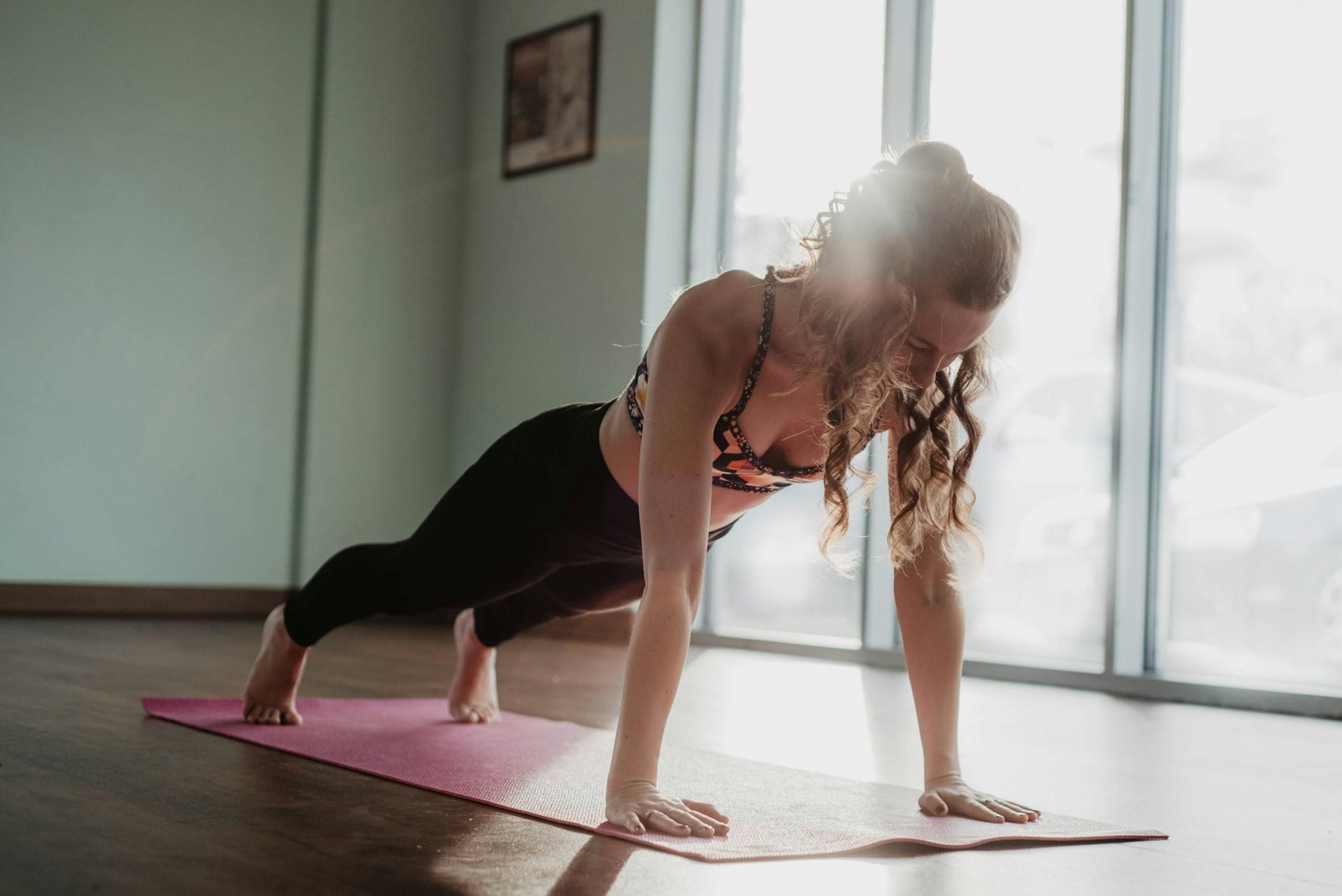
- Wall push-ups
- Light resistance-band rows
- Modified side-lying leg lifts
Keep sessions short. Ten minutes can be more useful than a punishing 45-minute workout that leaves you sore, depleted, and unable to settle the baby at 3 am.
What to avoid at first
Your joints and connective tissues may still be looser after pregnancy, particularly if you are breastfeeding. Your sleep is probably fragmented too, which changes how well your body recovers. This is not the season for proving anything.
In the early weeks, avoid:
- Running and jogging
- Jumping, skipping, trampolining, and burpees
- Heavy lifting beyond what is necessary for baby care
- High-impact fitness classes
- Crunches, sit-ups, and full planks
- Intense twisting movements
- Exercises that cause abdominal doming
- Any workout that makes you leak urine or feel pressure in the vagina
For many women, returning to running is best considered after around 12 weeks, often later, and only once they can walk briskly, squat, hop gently, and perform daily activities without pain, leaking, heaviness, or pelvic-floor symptoms.
Signs you are doing too much
Your body is very good at giving feedback. The trick is listening before you push through it.
Scale back and seek advice if you notice:
- Increased vaginal bleeding or lochia becoming heavier or brighter red after it had eased
- Pain in the pelvis, abdomen, back, perineum, or C-section scar
- A feeling of pelvic heaviness, dragging, or pressure
- Leaking urine during exercise
- Abdominal bulging or doming
- Severe fatigue that does not improve with rest
- Wound redness, swelling, discharge, or fever
Bleeding that suddenly becomes heavy, severe pain, chest pain, shortness of breath, calf swelling, or feeling acutely unwell needs urgent medical assessment. Trust your instincts. You know when something feels off.
Breastfeeding and exercise
The good news: moderate postpartum exercise does not reduce milk supply or make breast milk taste unpleasant. You do not need to pump and dump after a normal workout.
A few practical adjustments can make things more comfortable:
- Feed your baby, or express, before exercise if your breasts feel full.
- Wear a supportive, well-fitting sports bra that does not compress painfully.
- Drink regularly throughout the day, especially if it is warm or you are sweating.
- Eat enough. Breastfeeding already uses energy, and aggressive dieting can leave you exhausted.
- Start with low-impact sessions while you learn how your body responds.
If you notice supply concerns, speak with your midwife, health visitor, GP, or a breastfeeding support worker. Often the issue is not exercise itself but not eating, drinking, or resting enough.
Exercise can support your mental health too
Movement will not fix every hard day, and it is not a replacement for treatment when you are struggling. Still, regular gentle activity can improve sleep quality, lift energy, reduce stress, and ease symptoms of postnatal depression, sometimes called PPD.
A walk with the pram can be a reset. So can five minutes of stretching while your baby lies beside you on a mat. The benefit is not only physical. It is a small reminder that you are still in there, underneath the feeds, nappies, washing, and never-ending snack crumbs.
If you feel persistently low, anxious, detached from your baby, unable to cope, or have frightening thoughts about harming yourself or someone else, contact your GP, midwife, health visitor, or NHS 111. For immediate danger, call 999.
Give yourself more time than you think you need
Your body took around nine months to grow and change through pregnancy. Give it at least nine months to recover and adapt, and know that some parts of recovery can take longer. There is no prize for getting into pre-pregnancy jeans quickly. Honestly, they are not the benchmark.
The most useful postpartum workouts are the ones that help you feel stronger, steadier, and more at home in your body. Start with your pelvic floor. Walk when you can. Build patiently. And let “feeling good” matter more than looking like you never had a baby.
We as the developers of the Erby app disclaim any liability for any decisions you make based on this information, which is provided for general informational purposes only and is not a substitute for personal medical advice.