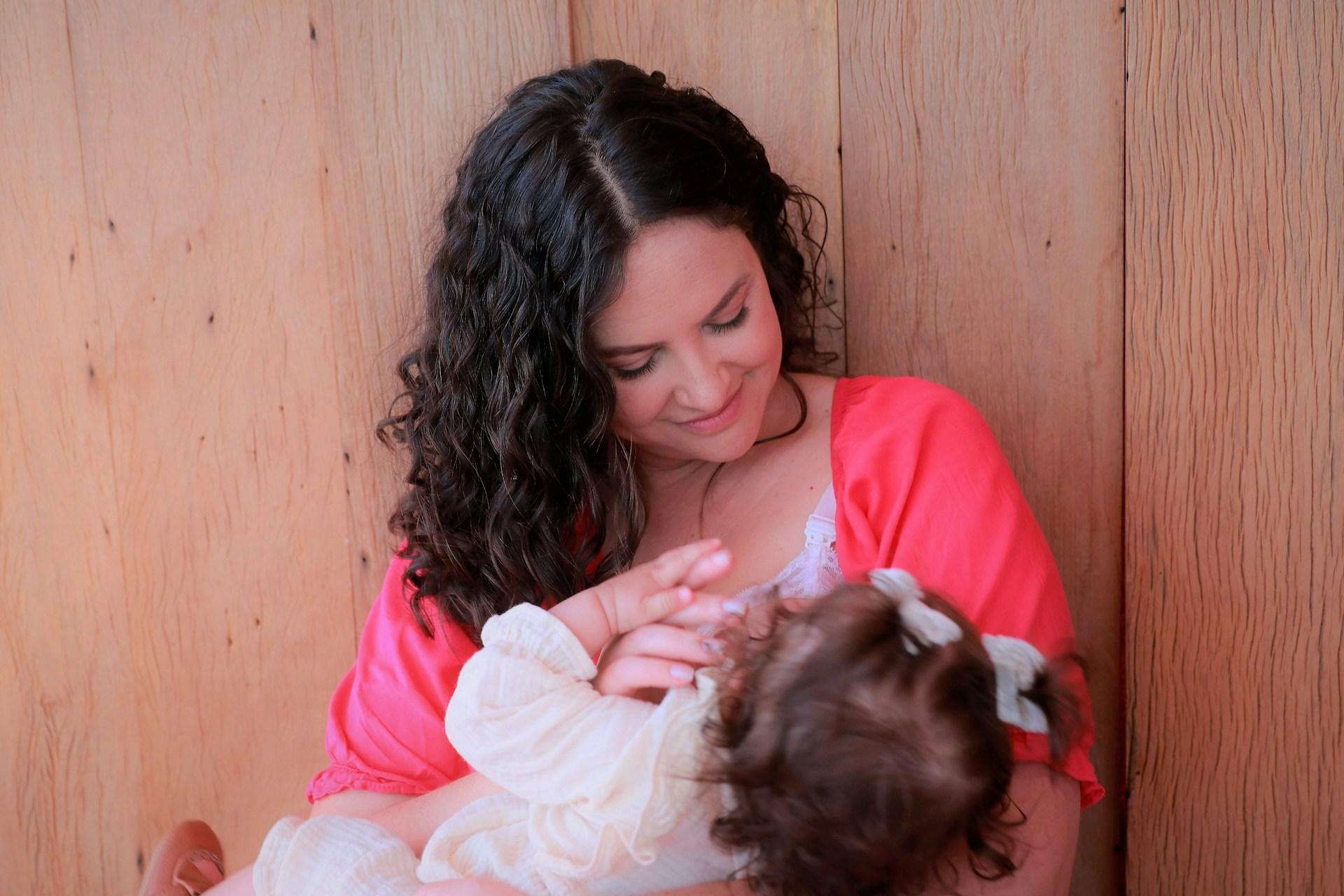
Why Your Baby Is Fussy at 5 Weeks - 5-6 Week Growth Spurt and Wonder Weeks Leap 1

You finally found a rhythm with your newborn. Feeding feels a tiny bit easier, baby sleep is slightly more predictable, and then suddenly, at around 5 weeks, it all falls apart.
Your baby is crying again. Wants to be held all day. Feeding every hour. Sleeping in 20-minute chunks. You might be wondering, slightly desperate at 3 a.m.: «Why is my baby fussy at 5 weeks? Is something wrong? Am I not making enough milk?»
Take a breath. This is almost certainly the 5–6 week growth spurt and the first big Wonder Weeks leap. It is intense. It is exhausting. And it is completely normal.
Let’s unpack what is going on, why your once-calm newborn suddenly feels like a different baby, and how you can get through this without losing your mind (or your confidence).
What actually happens at 5–6 weeks?
Around 5 weeks of age, your baby’s brain hits a big developmental jump often referred to in the Wonder Weeks as Leap 1. This is not just about putting on weight or getting longer. It is a perceptual shift.
Up until now, your newborn’s senses have been relatively muted. The world has been fuzzy and muffled, a bit like looking through frosted glass and listening with earplugs in.
During this 5–6 week growth spurt:
-
Senses become sharper.
Sounds are clearer, lights feel brighter, touch is more intense. What used to be background noise is now loud and possibly alarming. -
The world feels different.
Your baby suddenly realises, on a very basic level: «Something has changed.» This can be exciting and also incredibly overwhelming. -
The brain is wiring rapidly.
Millions of new connections are forming. That takes a lot of energy. So your baby needs more food, more comfort, and more help to regulate.
To you, this brain leap looks like a fussy baby who has “gone backwards”. To your baby, it feels like waking up in a brand-new world with no instruction manual.
The Wonder Weeks concept: Leap 1 explained
The Wonder Weeks is a popular concept based on the idea that babies go through predictable “leaps” in brain development during the first 20 months. These leaps often line up with periods of:
- increased crying
- clinginess
- changes in baby sleep
- more frequent feeding
Leap 1 usually appears around 5 weeks after the due date, not necessarily the birth date. So if your baby was born early or late, you might see this leap slightly shifted.
Leap 1 Wonder Weeks explained
During Leap 1, your baby becomes more aware of:
-
Touch:
Being held feels different. Clothes, nappies, baths, even a breeze on their skin can feel new and intense. -
Sound:
The hum of the fridge, traffic outside, siblings playing in the next room - all suddenly clearer and potentially overstimulating. -
Vision:
Your baby’s vision sharpens a bit. Faces become more interesting. Light and shadow stand out. They might stare at you more intently or look around with a very serious expression.
This is why your once-sleepy newborn might now seem wide-eyed and unsettled. Their senses are waking up, and they are still figuring out what to do with all that information.
Signs of the 5–6 week growth spurt and leap
Every baby is different, but there are some classic signs of the 5 week leap and the 5–6 week growth spurt.
You might notice:
-
Extra clinginess
Your baby wants to be on you all the time. Not next to you. On you. Lying down in the cot lasts 5 minutes, then the crying starts again. -
Crying more than usual
A baby who rarely cried might now cry in the evenings for what feels like hours. Others just grumble all day. It can look like a sleep regression, but it is actually developmental progress. -
Cluster feeding and feeding more often
Your baby may want to feed every hour or two, especially in the late afternoon and evening. This can be breast or bottle. They are not being “difficult” - their body and brain simply need more fuel. -
Disrupted sleep
Baby sleep can suddenly go off track. Short naps. Waking more often at night. Trouble settling in the cot. This is very common during a growth spurt. -
Wants to be held constantly
The moment you put them down: crying. On your chest: calm. This is not you “spoiling” your baby. It is your baby regulating their nervous system using your body. -
More startle responses
Your baby might jump more easily at noises or sudden movements as their sensory awareness heightens.
If you are ticking several boxes here, you are almost certainly in that 5–6 week window.
How long does a newborn growth spurt last?
When you are in the middle of it, it feels endless. But the 5–6 week growth spurt and Leap 1 typically last about:
- 1 to 2 weeks
Some babies have a very intense 3 to 5 days, then gradually settle. Others are a bit unsettled for a week or more.
A rough pattern many parents recognise is:
- Build-up (a day or two): baby starts getting a bit fussier, naps slightly shorter.
- Peak fussiness (a few days): constant holding, cluster feeding, very disrupted sleep.
- Gradual easing (several days): baby suddenly seems more alert, gives first smiles, sleeps stretches start to lengthen again.
If you are wondering how long does a newborn growth spurt last, most of these early spurts and leaps fall in that 1–2 week range, although the hardest part is often just a few days.
What your baby gains after this leap
There is a payoff at the end of this wild ride. Once your baby’s brain has adjusted to this new level of awareness, you are likely to see some lovely new skills emerge.
After the 5–6 week leap, many babies:
-
Are more alert and engaged
Your baby might stay awake a bit longer between feeds and actually look around instead of just fussing. -
Start giving social smiles
Not just windy smiles. Real, deliberate smiles in response to your face or voice. This often happens around 6 weeks and can feel like your baby saying: “Thanks for sticking with me.” -
Focus better on faces and objects
You might notice your baby locking onto your eyes, following your face as you move, or staring at a high-contrast pattern. -
Begin to coo and make new sounds
Little “ooohs” and “aaahs” start to appear. Your baby is experimenting with their voice and social interaction. -
Seem slightly more predictable again
Baby sleep might still not be perfect, but you may notice slightly longer stretches at night or more organised naps compared to the peak of the leap.
That’s the pattern of the Wonder Weeks: a stormy period of fussiness, then a sunny period where you suddenly see the new skills that all that hard work built.
Why your baby seems constantly hungry: growth spurt vs low milk supply
One of the most stressful parts of this stage, especially for breastfeeding parents, is the sudden cluster feeding. It is very easy to think:
- “My baby cries after every feed.”
- “They want to feed again 30 minutes later.”
- “They pull on and off the breast.”
- “I must not have enough milk.”
In almost all cases at this age, that is not what is happening.
Growth spurts and demand
During a baby growth spurt, your baby instinctively feeds more often. This does two key things:
-
Meets their immediate extra calorie needs
Their body and brain are growing rapidly. They are burning energy like mad. -
Signals your body to increase supply
With breastfeeding, the more milk removed, the more milk your body makes over the next day or two. Frequent feeding at the 5–6 week growth spurt is how your baby “orders” more milk.
If you are bottle feeding, you may also notice your baby finishing bottles more quickly or needing a slight increase in volume. Talk to your health visitor or GP if you are unsure about appropriate amounts for your baby’s weight and age.
Signs that supply is usually fine
If you are breastfeeding and wondering about low milk supply, look for these reassuring signs:
- Baby has regular wet nappies (usually at least 5–6 heavy wets per day by this age).
- Poos are soft and regular (for breastfed babies, anything from several times a day to once every few days can be normal).
- Weight gain is on track on the centile charts.
- Baby often seems content for at least some periods in the day, especially when held.
The fussy period at 5–6 weeks does NOT automatically mean low milk supply. It nearly always lines up with a growth spurt plus Leap 1. If you are worried, a quick check-in with your midwife, health visitor, breastfeeding counsellor, or GP can give you peace of mind.
And remember: babies cry during growth spurts regardless of whether they are breastfed or formula-fed. It is about development, not just nutrition.
Coping strategies: how to survive the 5–6 week growth spurt
You cannot stop the leap from happening, but you can make it easier on both of you.
1. Extra skin-to-skin
Skin-to-skin is not just for the first days after birth. At 5–6 weeks it can work wonders.
- Lay your baby on your bare chest, with a blanket over both of you.
- This helps regulate your baby’s heart rate, breathing, temperature, and stress hormones.
- It often calms a fussy baby more quickly than anything else.
Skin-to-skin can also boost breastfeeding hormones, which may help with milk supply if you are worrying.
2. Feed on demand
During this period, trying to stretch feeds to fit a schedule often backfires. If your baby is asking to feed every hour, it is usually because:
- They need more calories for growth
- They are seeking comfort and connection in a world that suddenly feels loud and bright
Feeding on demand:
- Supports growth
- Helps your baby feel safe
- Can help baby sleep better between feeds, even if it feels chaotic for a few days
If your nipples are sore or you are finding it emotionally hard, that is valid. Reach out for lactation support or talk to your GP or health visitor. You deserve support too.
3. Babywearing
A sling or baby carrier can be a total game-changer during this leap.
Benefits:
- Baby gets the constant holding and movement they crave.
- You have two hands free to make a cup of tea, eat something, or just scroll your phone in peace.
- Many babies nap better in a carrier during a growth spurt than flat in a cot.
Make sure your carrier supports baby’s hips in an “M” position and that your baby’s face is always visible and kissable. Local sling libraries in the UK, Australia, Canada and other English-speaking countries often offer free or low-cost fittings and advice.
4. Tag-team with your partner or support person
You were not meant to do this alone.
- Take turns holding the baby so one of you can sleep, shower, or just stare at the wall for 20 minutes.
- If you are breastfeeding, your partner can handle burping, nappy changes, and settling after feeds.
- If you are pumping or combination feeding, they can take on some feeds to give you a longer stretch of rest.
If you are solo parenting, lean on friends or family where you can. Even someone popping over to hold the baby while you nap on the sofa can make a big difference.
5. Lower your expectations for productivity
This is not the week to:
- Deep clean the house
- Reply to every message
- Bake from scratch
- Organise photo albums
Give yourself permission to do the bare minimum:
- Keep baby fed and safe
- Feed yourself something reasonably nourishing
- Sleep whenever you realistically can
Everything else can wait. Truly. This intense phase is temporary, and surviving it is an achievement in itself.
6. Protect your own mental health
The combination of sleep deprivation, crying, and constant physical contact can be brutal.
Some small things that help:
- Step outside for 5 minutes of fresh air while someone else holds the baby.
- Use headphones and a calming podcast, audiobook, or music during long cluster feeding sessions.
- Tell someone you trust: “I’m finding this really hard.” Saying it out loud matters.
If you notice persistent low mood, anxiety, intrusive thoughts, or you are feeling overwhelmed most of the day, speak to your GP or health visitor. Postnatal mental health struggles are common, treatable, and not your fault.
Is this a sleep regression or something else?
Many parents describe this phase as a sleep regression because baby sleep suddenly gets worse after a brief calm patch. Technically, at this age it is less about “regression” and more about:
- A normal growth spurt
- A developmental leap in perception
Still, what you feel is the same: less sleep, more crying, more rocking and shushing.
The good news:
- Once the leap passes, a lot of babies naturally settle into slightly longer stretches of sleep again.
- You do not have to “fix” it with strict routines at 5–6 weeks. Responsive settling, cuddles, feeding to sleep - these are all normal strategies for this age.
If you are struggling badly with baby sleep, you can talk to your health visitor, GP, or a qualified infant sleep specialist who uses gentle, developmentally appropriate methods. Be cautious of anyone promising quick fixes for a tiny baby; under 3 months, “solutions” that ignore feeding and growth spurts often cause more stress.
Fussy periods are signs of healthy brain development
Here is the big reframe:
That clingy, fussy, constantly-feeding baby is not “being difficult”. Those stormy days are a sign that your baby’s brain is developing exactly as it should.
At around 5 weeks:
- Their senses sharpen
- Their awareness increases
- Their emotional needs grow
- Their sleep patterns shift
It feels like everything is falling apart. In reality, your baby is taking a big step forward.
You are not going backwards. You are moving through a normal stage of development that almost every parent of a newborn meets at some point and thinks: “Is it just us?”
It is not just you.
A few final words of reassurance
If your baby is:
- More fussy at 5–6 weeks
- Feeding more often
- Sleeping less predictably
- Wanting to be held every second
and you are wondering:
- “Why is my baby fussy at 5 weeks?”
- “Is this a 5 week growth spurt?”
- “How long does a newborn growth spurt last?”
the most likely answer is:
You are right in the middle of the 5–6 week growth spurt and Wonder Weeks Leap 1, and your baby’s behaviour is normal.
You are not failing. Your milk is probably enough. Your baby is not “spoiled” or “bad at sleeping”. They are tiny, brand new, and right now the world just got bigger, brighter, and louder.
Hold them close. Accept help where you can. Drop the non-essentials. This intense period will pass, and on the other side you will meet a baby who smiles at you, locks eyes with you, and coos back when you talk.
This is temporary. And it means progress.
We as the developers of the Erby app disclaim any liability for any decisions you make based on this information, which is provided for general informational purposes only and is not a substitute for personal medical advice.