Your 2-Month-Old Baby: Milestones, Smiles, Senses and Practical Tips
Those first eight weeks can feel like a blur of feeds, nappies, laundry and wondering whether you will ever drink a hot cup of tea again. Then, almost out of nowhere, your baby looks straight at you and smiles. A real smile. Not wind. Not a reflex. For many parents, that moment makes the whole world stop.
At around two months, your baby is changing fast. They are still tiny and deeply dependent on you, of course, but they are no longer quite the sleepy newborn you brought home. Their movements are becoming less jerky, their eyes are learning where to look, and they are starting to answer your voice with coos, smiles and excited little kicks.
Every baby follows their own timetable, so think of these 2 month milestones as a guide rather than a test. Some babies race ahead in one area and take their time in another. Premature babies may reach baby milestones according to their corrected age, so do speak with your health visitor or GP if you are unsure.
Your baby at 2 months: a busy little person
If you have been searching “what can 2 month old do?” at 3 am while holding a baby who refuses to settle, you are in good company. A 2 month old is starting to engage with the people and world around them in ways that feel wonderfully personal.
You may notice that your baby:
- Watches your face with real interest
- Smiles when you smile or talk
- Lifts their head briefly during tummy time
- Coos back when spoken to
- Turns towards a familiar voice
- Stares at their own hands as if they have just discovered a new invention
- Kicks and waves when excited
- Begins to settle into slightly more predictable awake periods
The newborn milestones of feeding, sleeping and simply adjusting to life outside the womb are still a huge part of the day. Yet baby development at 2 months brings more interaction. You are not just caring for your baby now. You are beginning to have a relationship with them.
Physical development: stronger muscles and smoother movements
Your baby’s body is working hard behind the scenes. Their neck, shoulders, arms and core are gradually gaining strength, and those early reflex-driven movements are becoming a little more controlled.
Your 2 month old lifts their head
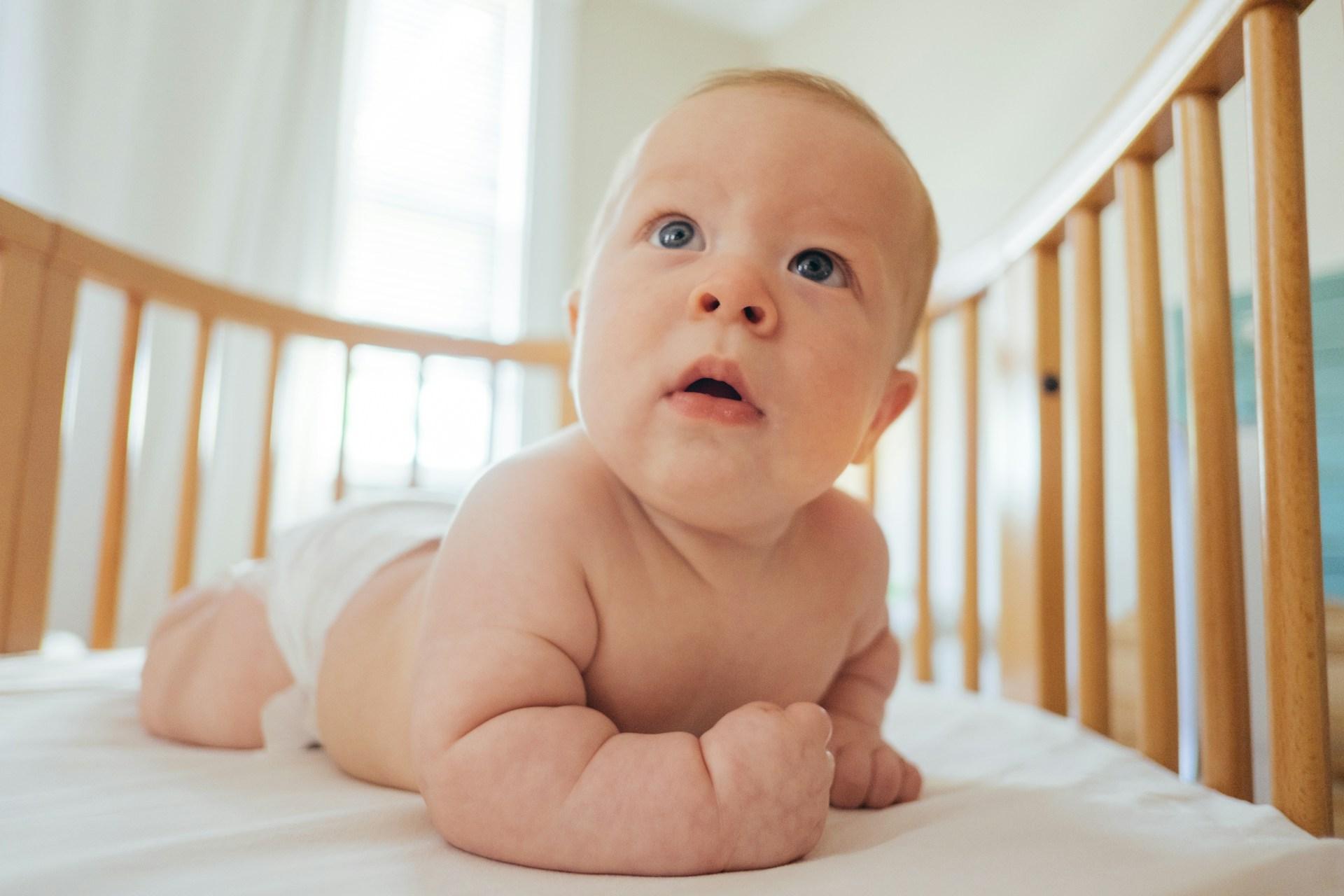
One of the most exciting 8 week baby milestones is head control. During supervised tummy time, many babies can now lift their head to around 45 degrees and hold it there briefly. It may only last a few seconds before their cheek lands back on the mat. That still counts.
You might also see your baby beginning to bear some weight through their forearms while lying on their tummy. Their elbows may tuck under their shoulders for a moment, helping them prop up their chest and look around. It is the beginning of the strength they will later use for rolling, sitting and crawling.
A 2 month old tummy time session does not need to be long or picture-perfect. A few short attempts across the day can add up. Try:
- Placing your baby on your chest while you recline on the sofa
- Laying them on a firm play mat after a nappy change
- Holding a black-and-white card or your face just in front of them
- Getting down on the floor beside them and chatting
- Trying tummy time when they are calm and alert, rather than hungry or overtired
Always supervise tummy time closely, and always place your baby on their back for sleep.
Less flailing, more flow
In the early newborn days, your baby’s arms and legs may have seemed to move in sudden, startling bursts. At two months, those movements often become smoother. Their legs may kick rhythmically when they are excited, especially when you lean close and talk to them. Their arms may wave in broad, enthusiastic circles.
They are still far from coordinated, but you may catch a glimpse of intent. A hand heads towards the mouth. A foot pushes against your lap. An arm reaches in the direction of a dangling toy, then misses entirely. Baby effort is very sweet to watch.
Their hands are beginning to open
The tightly clenched newborn fist is slowly relaxing. Your baby may hold their hands open more often, particularly when they are calm. The grasping reflex is lessening, although they can still grip your finger with surprising strength.
Soon, your baby may start brushing at toys or accidentally batting something hanging overhead. They do not yet understand that their hand caused the toy to move, but that discovery is coming.
More time awake
Some babies may have doubled their daily awake time since birth. That does not mean they are ready for a packed schedule. It simply means you may have more peaceful alert windows between feeds and naps.
A typical 2 month old sleep schedule is often still unpredictable. Many babies sleep in short stretches during the day and wake regularly overnight for feeds. Some begin to offer one longer sleep period at night, while others do not. Both can be normal.
Watch your baby rather than the clock. Yawning, staring into space, rubbing their face, fussing and turning away are common signs they are ready to sleep.
Vision: your face is becoming their favourite view
A baby’s visual world is opening up quickly at this age. Their 2 month old vision is clearer than it was in the first few weeks, and they are increasingly fascinated by faces, contrast and movement.
Following objects with their eyes
Your baby may now track a face, toy or high-contrast image smoothly across a 180-degree arc. In other words, they can follow something from one side of their body to the other, rather than losing sight of it halfway through.
Try moving your face slowly from side to side when your baby is awake and comfortable. You might see their eyes follow you, then their head turn too. It is a lovely little game, and no expensive toy is needed.
Recognising familiar faces
By two months, many babies recognise the faces of their parents or regular caregivers. They may stare at you intently, brighten when you appear, or settle more easily in your arms than with someone unfamiliar.
This is not just recognition in a vague sense. Your baby is learning the shape of your eyes, your expressions, your scent and the sound of your voice. You are becoming one of the most familiar things in their world.
Preferences and early colour vision
Your baby is likely to show clear visual preferences now. Bold patterns, simple shapes, faces and high-contrast books tend to be big hits. They may look longer at a striped card than at a plain wall, or become completely absorbed by the pattern on your jumper.
They are also beginning to see colours more clearly. Bright reds, yellows and blues may catch their attention, though they do not need a nursery full of stimulating gadgets. A colourful muslin, a picture book or the garden outside the window can be plenty.
Hearing: listening, recognising and responding
Your baby has been hearing for some time, but around two months they often become much more obvious about it. The sound of your voice matters. So does the familiar creak of the stairs, a sibling’s laugh or the opening bars of a song you play often.
Turning towards sound
Many 2 month olds begin to turn their head towards a sound, especially a voice. You may notice your baby looking towards you when you speak from the side of the cot or reacting when another person enters the room.
They are also starting to distinguish between familiar and new voices. A familiar caregiver’s voice may bring a calmer expression, a pause in crying or an eager wiggle. Strange voices are not necessarily upsetting, but they may prompt a thoughtful stare.
Music can be soothing
Some babies quiet down to listen to music. A gentle lullaby, a favourite radio presenter or your slightly off-key singing can all hold their attention. You do not need to perform perfectly. Honestly, your baby is unlikely to judge your vocals.
Keep volumes low, particularly with headphones, television or speakers nearby. Babies’ ears are sensitive, and calm sound is more than enough.
Social development: hello, smiley baby
This is the month many parents remember forever. The 2 month old smile is often well established, and it can feel like a direct message from your baby: “I know you.”
The social smile is here
Unlike the fleeting reflex smiles of the newborn stage, a social smile happens in response to interaction. You smile. They smile back. You make a funny noise. Their whole face lights up.
Not every baby smiles at exactly eight weeks. Some begin earlier, others later. If your baby is alert, looking at faces and gradually becoming more responsive, give them time.
Laughter, squeals and full-body excitement
A few babies may laugh or squeal with excitement at two months, though proper giggles often arrive later. You may hear a breathy little chuckle during a game, or an enthusiastic squeak when you pull a silly face.
Their whole body may join the conversation:
- Arms wave furiously
- Legs kick hard
- Hands open and close
- Their face becomes animated
- They wriggle towards you when they are pleased
It can look chaotic. It is actually communication.
Familiar people feel safest
Your baby may show a preference for familiar people, especially parents and regular caregivers. They may settle faster with you, look more relaxed when they hear your voice or become particularly smiley during your usual morning chat.
This does not mean they are “spoiled” or becoming clingy. They are building attachment. Feeling safe with a trusted adult gives babies the confidence to pay attention to everything else.
Communication: those tiny conversations are real
At two months, your baby is not using words, but they are definitely communicating. Their sounds, expressions, movements and cries all carry meaning.
Cooing becomes a regular feature
Many babies begin cooing regularly with soft vowel sounds such as “oo”, “ah” and “eh”. You may hear these little noises during a nappy change, while they lie under a play gym or when you lean over them after a nap.
They may also start adding a few consonant-like sounds. Nothing fully formed yet, but perhaps a gentle “guh” or “mm” in the middle of a coo. It is early vocal practice, and it is fascinating.
Your baby “talks” back
Speak to your baby, then pause. You may find they answer with a coo, a wiggle or a wide-eyed stare. This back-and-forth is the beginning of conversation.
Try copying their sounds and waiting for their response. It can feel slightly silly at first. Then they coo back, and suddenly you are both having a chat.
Different cries become easier to recognise
By now, many parents can hear differences between cries. There may be a hungry cry, an overtired cry, an “I need a cuddle” cry and an unmistakable “my nappy is uncomfortable” protest.
You will not decode every cry immediately. Nobody does. But over time, patterns emerge. Trust that growing familiarity.
Cognitive development: routines, hands and little predictions
Cognitive growth at this age is less about solving puzzles and more about noticing patterns. Your baby is learning that certain sights, sounds and sensations happen together.
Anticipating familiar routines
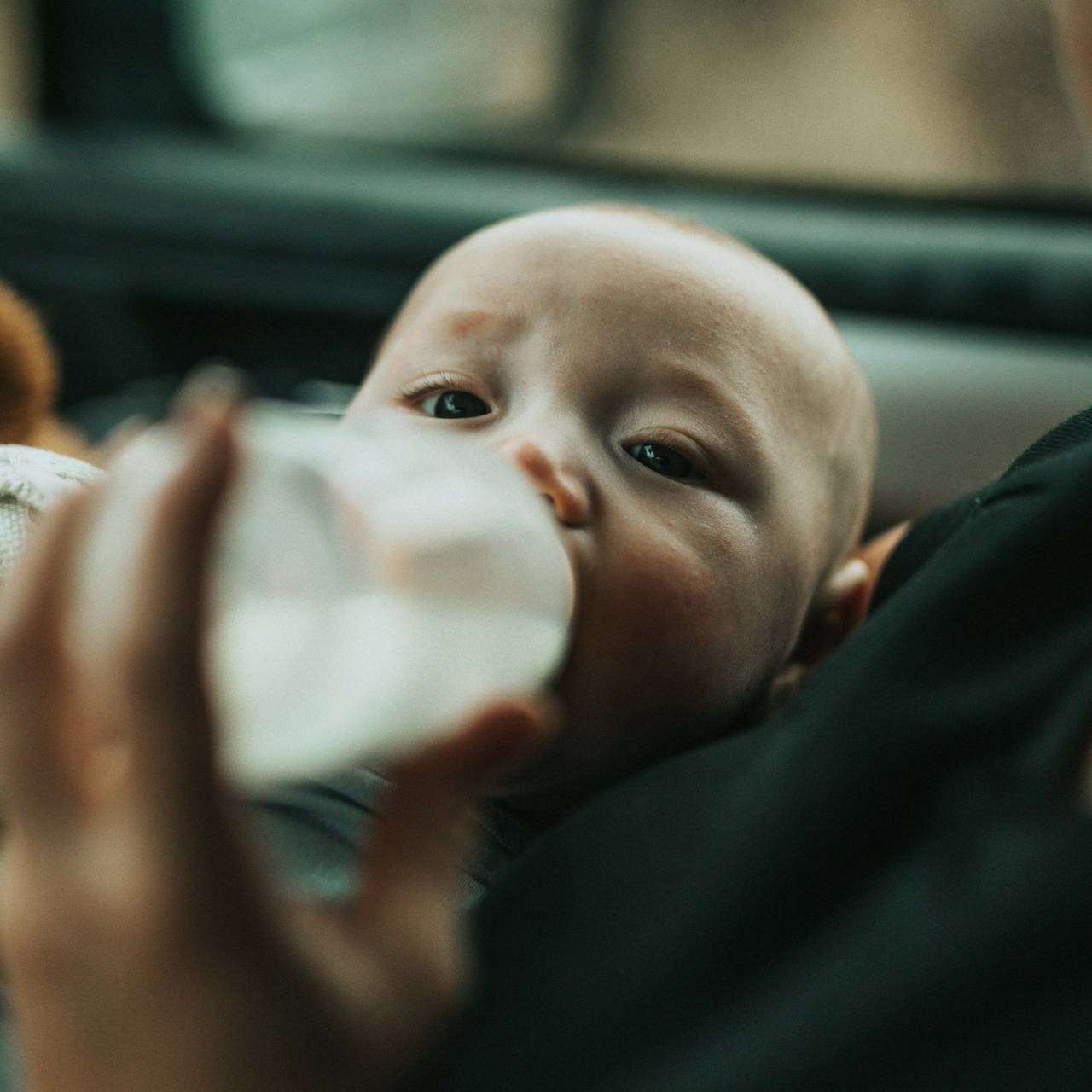
Does your baby become excited when they see the breast or bottle? Do their arms wave when you sit in the usual feeding chair? They may be starting to anticipate routines.
A baby who sees a bottle and begins rooting, kicking or fussing with excitement is showing early memory and expectation. They are connecting a visual cue with the comforting experience of being fed. Pretty impressive for someone who cannot yet hold their own head steady.
Discovering their own hands
Your baby’s hands are becoming a source of endless fascination. They may stare at them, hold them in front of their face or bring them to their mouth. Sometimes they will accidentally bonk themselves on the nose, look startled and try again.
Hand discovery is a major part of 2 month baby development. Those hands will soon become tools for reaching, grabbing, exploring and self-soothing.
A simple 2 month milestones checklist
Use this 2 month milestones checklist as a snapshot, not a scorecard. Your baby may do some things now and others over the next few weeks.
- Lifts their head around 45 degrees during tummy time
- Briefly supports themselves on their forearms during tummy time
- Moves arms and legs more smoothly
- Opens their hands more frequently
- Watches faces and objects move across a wide arc
- Recognises familiar faces and voices
- Begins noticing colours and prefers bold patterns
- Turns towards sounds
- Smiles socially
- May squeal or make early laugh-like sounds
- Coos and responds when spoken to
- Uses different cries for different needs
- Shows excitement before familiar routines, especially feeds
- Stares at and mouths their hands
If you have concerns about hearing, vision, feeding, muscle stiffness, floppy movements, or if your baby is not responding to sound or making eye contact at all, contact your health visitor, GP or local child health clinic. Trust your instincts. You know your baby best.
Things to look forward to in month 3
The coming weeks bring even more personality. In month 3, you may see longer, happier tummy time sessions, stronger head control, more deliberate swipes at toys and even more animated “conversations”. Your baby may grin at their reflection, become fascinated by their fingers, and reward your most ridiculous songs with a proper laugh.
The newborn days are already shifting. Your baby is watching, listening, learning and falling more deeply into the rhythm of your family. And yes, they still need plenty of feeds, naps and cuddles. But now they are starting to show you who they are.
We as the developers of the Erby app disclaim any liability for any decisions you make based on this information, which is provided for general informational purposes only and is not a substitute for personal medical advice.