Your Baby's First Real Smile - When It Happens, What It Means, and How to Encourage It
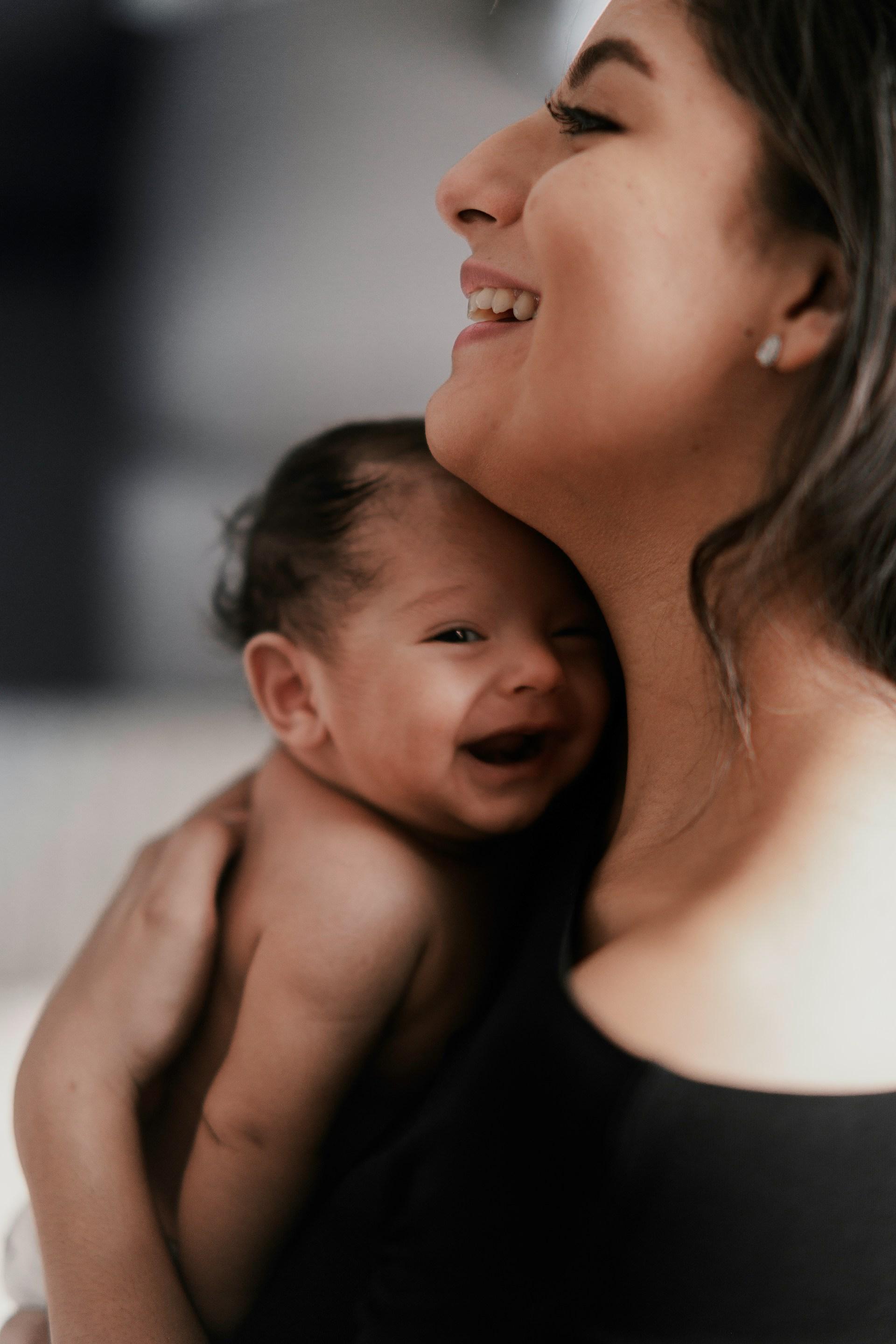
You’ve survived the sleepless nights, the endless nappy changes, the feeds that blur into each other. Then one morning, you lean over the cot, say a soft “hello”, and it happens. Your baby’s first real smile.
For a second, time actually pauses.
That tiny curve of their lips, those crinkled eyes, the way their whole face seems to glow - it feels like the world’s greatest reward for everything you’ve poured into these first weeks.
This moment matters. Not just to your heart, but to your baby’s development too. Let’s walk through what that first real baby smile means, when it usually appears, how to tell if it is real, and how you can gently encourage more of those magical grins.
When do babies smile for the first time?
Parents often ask, a bit anxiously: when do babies smile? When does that very first real baby smile appear?
Most babies give their first true social smile between 4 and 8 weeks, with a lot of little ones smiling around 6 weeks of age. You might see:
- Tiny, random smiles in the first couple of weeks
- More frequent smiles around 4 weeks
- Clear social smiles, where your baby smiles back at you, from 6 weeks onward
So if you’re wondering, “When do babies smile for the first time?”, the common answer is that first recognisable social smile often shows up somewhere around 6 weeks, but anything in the 4–8 week window is typical.
Some babies take a bit longer. A few wait until around 10–12 weeks before they flash that unmistakable “I see you” grin. We will come back to that, especially if you are already checking the calendar.
Reflexive smile vs social smile: how to tell the difference
You might have already spotted your newborn smiling in their sleep and thought, There it is! Then the midwife or health visitor gently says it is probably just a reflexive smile.
So what exactly is the difference between a reflexive smile in a newborn and a real, social smile?
What is a reflexive smile in a newborn?
In the early days, especially in the first 2–3 weeks, your baby’s smiles are usually reflexive. They are not smiling at you yet, even though it is very tempting to believe they are.
A reflexive smile in a newborn typically:
- Appears randomly, not linked to your face or voice
- Happens a lot during sleep, especially light sleep
- Comes and goes very quickly
- Does not usually involve the eyes or the whole face
You might see a half-smile, a twitch at the corners of the mouth, or a fleeting grin while they are drifting off. This is often just your baby’s nervous system firing, their brain and facial muscles practising early movements.
So if you have been wondering, “Why do babies smile in sleep?”, the answer is usually that it is part of normal newborn reflexes, not an emotional response or a joke you told.
Still lovely. Still heart-melting. Just not quite that first social smile yet.
What is a social smile?
A social smile is the game changer. This is the moment your baby smiles in response to something, especially your face or your voice.
A true social smile usually:
- Appears between 4–8 weeks, often around 6 weeks
- Happens when you interact: talking, smiling, cooing
- Includes the eyes - they crinkle or light up
- Spreads across the whole face, sometimes with little arm or leg wiggles
- Often comes after a second of eye contact, as if your baby is thinking, Oh, it’s you!
If you are asking, “How to tell a real smile in a newborn?”, look for:
- Timing - do they smile right after you talk or smile at them?
- Eyes - do their eyes look bright or slightly crinkled?
- Expression - does their whole face join in?
That is your baby’s first real smile. Your baby is not just randomly moving their mouth anymore. They are responding to you.
What does your baby’s first smile mean developmentally?
That first real baby smile is not just adorable, it is a big step in your baby’s brain and social development.
Your baby can now see you more clearly
In the first few days, your newborn’s vision is quite blurry. They can see about 20–30 cm clearly - roughly the distance from your face when you hold them for a feed. Over the first weeks, their vision improves, and by 6–8 weeks they can:
- Focus better on faces
- Track your face with their eyes
- Notice your expressions
So when that first smile baby gives back to you, part of what is happening is that they can actually see you clearly enough to recognise your features and respond.
Your baby is starting to recognise you
Many parents wonder, “When do babies recognise parents?” The answer is: earlier than you might think.
By the time your baby gives their first social smile, their brain has already been busy:
- Learning your voice from all those hours of talking, singing, and shushing
- Getting used to your smell and the way you hold them
- Piecing together the look of your face
That first smile often means your baby is starting to connect the dots:
This voice, this face, this warmth… I know this person. I feel safe.
Emotional and social brain development
A lot is happening behind that tiny smile. Brain regions linked to emotion, bonding, and social interaction are developing fast in the first months.
Your baby is:
- Beginning to communicate: smiling is one of their first social signals
- Learning that when they smile, you react
- Starting a very early form of conversation - you smile, they smile, you both feel good
This is early baby social smile age, and it is the beginning of your child’s lifelong social skills. Sharing joy, responding to others, building relationships - it all starts here, in a way that looks so simple but means so much.
How to encourage your baby to smile
You cannot force a smile, of course, but you can gently encourage baby smile development.
Here are some lovely, simple ways to invite that first grin.
1. Go face-to-face
Babies are wired to love faces. Especially your face.
- Hold your baby close, about 20–30 cm from your face
- Make sure there is soft light so they can see you clearly
- Give them a moment to focus on you
Short, frequent face-to-face times work beautifully. Nappy changes, after a feed, or when they are drowsy but calm all offer great opportunities.
2. Use big, happy expressions
Your normal, subtle smile is sometimes a bit too faint for a new baby. Think dramatic stage acting, just for them.
Try:
- Raising your eyebrows
- Opening your mouth in a wide, happy smile
- Slowly moving your face closer, then back
- Tilting your head from side to side as you smile
Babies often respond more when your expression is clear and exaggerated. It helps them understand: this is a happy face.
3. Talk in a higher, sing-song voice
That soft, sing-song tone that parents naturally switch into? There is a reason it is so common.
Speaking in a higher-pitched, gentle voice:
- Grabs your baby’s attention
- Soothes them
- Helps them connect your voice to safety and comfort
You might say things like:
- “Hello, gorgeous, I see you!”
- “Are you looking at Mummy’s face?”
- “You’re working on that baby smile, aren’t you?”
It doesn’t really matter what you say. Your tone and warmth are what your baby is soaking in.
4. Pause and wait
This bit is surprisingly powerful.
When you smile and talk to your baby:
- Smile and say something gentle
- Hold that smile
- Pause for a few seconds
- Watch their face closely
Babies sometimes need a little time to process what they see and feel, then respond. If you rush on, you might miss those tiny early attempts at smiling.
5. Follow their lead
If they:
- Turn away
- Start fussing
- Look overstimulated or tired
Just ease back, give them a cuddle, and try again later. Smiling should feel fun and relaxed, not like a test.
Why your baby’s first smile matters so much to you
You probably already know the answer in your bones. But it helps to name it.
Those first weeks with a newborn can be hard. Long nights, unpredictable days, sore bodies, hormones all over the place. You give and give and give, often with not much feedback from your tiny baby yet.
Then one day, out of nowhere, they smile at you.
The first emotional reward
That first smile is often the first clear emotional response you get back from your baby. Not a cry for hunger or a squirm of discomfort, but a genuine expression of:
- Comfort
- Recognition
- Connection
It feels like your baby is saying, in the only way they can right now,
“I know you. I like you. I feel safe with you.”
No wonder so many parents remember that moment for years.
A powerful bonding moment
When your baby’s first smile appears, your body often responds too. You might feel:
- A wave of warmth
- Tears in your eyes
- A physical sense of “this is my baby”
Oxytocin, sometimes called the bonding hormone, plays a big part here. Those moments of shared joy, when you smile and your baby smiles back, help strengthen your bond and reinforce that deep attachment building between you.
Easing stress and worry
Early parenthood can come with a lot of self-doubt.
Am I doing this right? Does my baby like me? Am I enough?
A social smile feels like a little yes to all of those questions. It can:
- Lower your stress
- Boost your confidence
- Remind you that your baby is developing and connecting, even on the difficult days
That is why this tiny milestone often feels so huge.
When do babies smile in a typical pattern?
To pull it all together, here is a simple timeline many parents find reassuring:
-
Birth to 3 weeks:
- Reflexive smiles, especially in sleep
- Random expressions, not yet linked to social interaction
-
Around 4 weeks:
- More alert periods
- Occasional smiles when awake, may start to look slightly more responsive
-
Around 6 weeks (very common):
- Clear baby smile development at 6 weeks
- First true social smiles, especially at familiar faces and voices
-
6–8 weeks:
- More frequent social smiles
- Baby starts to smile as part of back-and-forth interaction
-
8–12 weeks:
- Smiles become easier to draw out
- Baby might smile at other familiar people too, not just parents
Every baby is unique, but this gives a rough sense of baby social smile age and how it often unfolds.
Not seeing a smile yet? Try not to panic
If your baby is around 6 weeks and has not given a clear social smile yet, take a breath. It does not automatically mean something is wrong.
A few things to keep in mind:
- Some perfectly healthy babies do not show a clear social smile until up to 12 weeks
- Premature babies often reach milestones based on their corrected age, not their birth age. So if your baby was born 4 weeks early, you might expect that first smile 4 weeks later than the calendar suggests
- Tired or unsettled babies sometimes show fewer smiles simply because they are using all their energy on basic needs
What matters is overall behaviour, not just this one milestone. Ask yourself:
- Are they gradually becoming more alert when awake?
- Do they sometimes make eye contact with you?
- Do they react in some way to your voice or a sudden sound?
If you are worried, trust your instincts and speak to your GP, health visitor, or paediatrician. They can:
- Check your baby’s general development
- Reassure you, or
- Arrange follow-up if anything looks unusual
Most of the time, though, the story goes like this: you wait, you worry a bit, you google “when do babies smile for the first time”, and then one quiet afternoon, your baby looks straight at you and breaks into a grin. And you realise it was always coming.
Treasure the tiny moments
Your baby’s first real smile is not just a milestone you can tick off an app. It is a moment:
- In the half-light of a 6 am feed
- On the sofa, when you are still in pyjamas
- At the changing table, when you are least expecting it
When it comes, let yourself feel it fully. Laugh, cry, talk to your baby about it.
“You smiled at me! That was your first real baby smile!”
You have worked incredibly hard for that little curve of the lips. Sleep lost, tears shed, doubts faced. This is your baby’s way of saying, as loudly as their tiny face can manage:
“I’m glad you are mine.”
We as the developers of the Erby app disclaim any liability for any decisions you make based on this information, which is provided for general informational purposes only and is not a substitute for personal medical advice.