Baby Play Mats and Activity Gyms - Benefits, Safety and Buying Guide
A play mat can look like one of those baby items everyone seems to own. Bright colours, dangling animals, tiny mirrors, cheerful music. But do you actually need one? Not really. Can it make early floor play easier and more enjoyable? Often, yes.
A good baby play mat gives your little one a comfortable, contained place to look, stretch, kick, reach and gradually practise new skills. It is not a must-buy, and it will not magically speed up development. Still, for many families, it earns its space on the living-room floor.
What Is a Play Mat or Activity Gym?
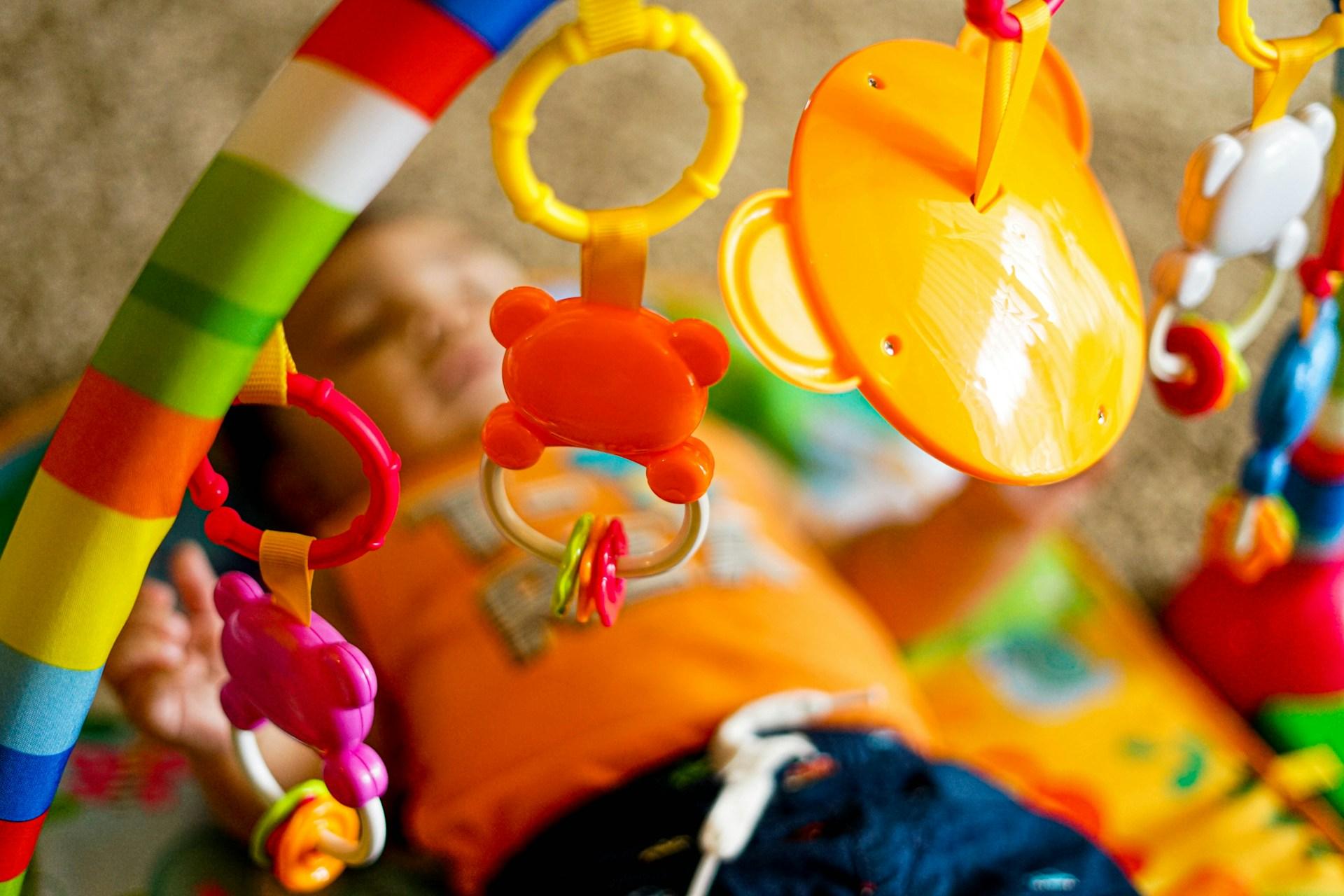
A play mat for baby is usually a padded mat designed for supervised floor play. Some are simple, flat mats. Others have flexible arches overhead with toys hanging down.
The arched version is often called a play gym, activity gym or baby activity mat. Babies lie on their backs beneath the arches and look at toys, high-contrast shapes, mirrors or soft rattles. As they grow, they start reaching towards them, then swiping, grasping and batting at them.
Many activity gyms include extras such as:
- Detachable soft toys
- Crinkle panels
- Small rattles
- Baby-safe mirrors
- Textured fabric sections
- Music or sound features
- A tummy-time pillow
A flat baby mat, on the other hand, has no overhead toys. It may be quilted, foam-filled or made from wipe-clean padded fabric. Think of it as a designated floor spot for play, books, rolling practice and tummy time.
When to Start Using a Play Mat
Parents often ask, when to start using play mat products. In most cases, you can begin from around 4 to 6 weeks, provided your baby is awake, comfortable and closely supervised.
At that age, they will not be grabbing toys. Their main job is simply looking. A toy suspended above them, especially one with bold black-and-white patterns or clear contrasting colours, can catch their attention for a few seconds at a time.
The activity mat for newborns becomes far more interesting from about 2 to 4 months. This is when many babies begin to:
- Track objects with their eyes
- Reach towards a toy
- Open and close their hands around objects
- Swipe at dangling shapes
- Kick excitedly when something moves or makes a sound
Every baby works to their own timetable. One may spend ten calm minutes watching a soft fox sway overhead; another may prefer staring at the ceiling fan. Both are normal.
Are Play Mats Safe for Newborns?
So, are play mats safe for newborns? Yes, when used correctly. A mat should be used only for awake, supervised play on a level floor.
Never use it as a sleep space, even if your baby nods off after a busy few minutes of kicking. Move them to a safe, clear cot or Moses basket for sleep. Keep the mat away from stairs, fireplaces, pets, loose cables and small objects that could become choking hazards.
Play Mat Benefits: What Do Babies Get From One?
The best play mat benefits are not flashy. They are simple opportunities to move, notice and explore.
Visual stimulation
In the early weeks, babies are learning how to focus their eyes. Hanging toys, contrasting patterns and a baby-safe mirror give them something interesting to look at. You do not need a riot of colour. A few clear shapes are plenty.
Motivation to reach and grasp
A dangling toy gives babies a reason to move their arms. At first, those swipes are accidental. Then comes the lovely moment when they realise, “I hit that thing and it moved.”
Reaching, batting and eventually grasping support early hand-eye coordination. It is play, not a lesson. That is the beauty of it.
A practical surface for tummy time
A baby play mat can make tummy time more comfortable than a bare hard floor. Place a soft toy, board book or unbreakable mirror just in front of your baby to encourage them to lift and turn their head.
Start small. Even one or two minutes of tummy time, repeated through the day, counts. If your baby objects loudly, try tummy time on your chest first, then return to the mat later.
A safe place for floor play
Having one known, clean area for supervised play is handy. You can put your baby down while you fold laundry nearby, make a cup of tea or simply sit beside them and chat. Floor time also lets babies move more freely than they can in a bouncer, swing or car seat.
Types of Baby Play Mats
Not all mats suit every home or every stage. Here is a straightforward play mat buying guide to the main options.
1. Activity gym with arches
This is the classic choice and still the most popular style. A padded mat sits beneath one or two arches, with toys hanging down within reach.
Many include music, lights or removable sensory toys. They are especially useful in the first few months, when your baby spends lots of time on their back looking upwards.
Best for: babies from roughly 4 weeks to 5 or 6 months, and parents who want an all-in-one play setup.
Potential downside: once your baby rolls or crawls, they may quickly leave the mat behind.
2. Flat play mat without arches
A flat play mat is simpler and usually lasts longer. It works beautifully for tummy time, rolling, sitting practice, picture books and later independent play with blocks or soft toys.
Because there are no arches, you can use it in more ways. Spread it in the kitchen, take it to grandparents’ house, or use it outdoors on dry grass with a waterproof layer underneath.
Best for: families who want a versatile mat that can be used well beyond the newborn phase.
3. Combination mats
Combination designs offer the middle ground. They have removable arches, so you can use them as an activity gym at first, then detach the toys and keep the padded mat as your baby grows.
They tend to cost more, but the longer lifespan can make them good value. If you are comparing the best baby play mats, this flexible design is well worth considering.
What to Look for When Choosing a Baby Mat
A pretty print is nice. Practical details matter more.
Washable fabric
Babies are messy. Milk dribbles, nappy leaks and surprise sick-ups happen. Look for a mat with a removable, machine-washable cover or one that can be wiped clean without much fuss.
Check the care label before buying. “Spot clean only” can become tiresome very quickly.
Non-toxic materials
Choose products made with clearly stated, non-toxic materials. Avoid mats with a strong chemical smell when opened. If it smells harsh, let it air out and consider returning it if the odour persists.
Look for securely stitched seams and toys that cannot easily come apart.
Interesting textures and sounds
Babies do not need twenty toys at once. A small variety is enough:
- Crinkly fabric
- A gentle rattle
- Different textures to touch
- A safe mirror
- Soft fabric tags or ribbons
These features give your baby something new to discover without turning playtime into sensory overload.
Enough padding
The mat should feel comfortable on your floor. If you have hardwood, tile or laminate, choose one with decent cushioning, or place it on top of a rug. For carpeted rooms, a thinner padded mat may be fine.
Removable toys and adjustable arches
Removable toys are useful because you can rotate them, wash them or attach a favourite teether later. Adjustable arch height is another helpful feature. Toys should hang close enough for your baby to notice and eventually reach, but not rest on their face.
What to Avoid
More features do not always mean a better baby activity mat.
Try to avoid mats packed with flashing lights, loud songs and constant electronic noises. A short tune now and then is fine, but a toy that takes over the whole play session can be distracting. Your voice, facial expressions and conversation are far more interesting to your baby than a flashing plastic button.
Also skip anything with loose parts, poorly attached decorations, sharp edges or thin padding. If the product feels flimsy in the shop, it probably will not improve at home.
When Does a Baby Outgrow an Activity Gym?
Most babies outgrow the arched play gym once they are regularly rolling away from it or beginning to crawl. For many, that happens around 5 to 6 months, though some lose interest sooner.
That does not mean the mat itself is finished. Remove the arches, add a few age-appropriate toys and keep using it for floor play. A flat mat can remain useful through sitting, crawling and toddler book time.
Do You Really Need to Buy One?
Here is the honest answer: no.
A clean blanket on the floor with a few safe toys can work just as well. Add a folded towel underneath for extra padding, place a high-contrast card nearby, and you have a perfectly good newborn play area. Babies do not know whether their rattle came from a £70 designer gym or the supermarket.
The best play mats for newborns are the ones you will actually use: clean, safe, comfortable and easy to maintain. If an activity gym fits your budget and makes tummy time simpler, it can be a lovely purchase. If it does not, skip the pressure. Your baby needs time on the floor, a few interesting things to look at, and you nearby.
We as the developers of the Erby app disclaim any liability for any decisions you make based on this information, which is provided for general informational purposes only and is not a substitute for personal medical advice.