What Can a 1 Month Old Do? One Month Milestones, Senses and How to Help

Your tiny newborn is already 1 month old. That first hazy whirlwind of days and nights is starting to feel just a little more familiar, and you might be wondering: what can a 1 month old do already?
Quite a lot, actually.
This stage of newborn development is full of subtle but exciting changes. Some are easy to miss in the blur of feeds and nappy changes, so let’s slow down and look closely at your one month baby and all the quiet magic happening right now.
We’ll walk through the main 1 month milestones - physical, vision, hearing, communication and social - and I’ll also share simple ideas for how to help your 1 month old grow and learn. And yes, we will keep coming back to one very important truth: all babies develop at their own pace and that is completely normal.
A quick word about 1 month milestones and normal variation
Before diving into what a one month old may do, let’s set expectations in a gentle, realistic way.
When you read lists of baby milestones, it can be tempting to treat them like a checklist:
- “Should my 1 month old be doing this already?”
- “Is my baby behind?”
- “My friend’s baby is doing X, why isn’t mine?”
Newborns, especially in the first three months, develop on a very wide range of timelines. Two healthy 1 month babies can look totally different in:
- how alert they seem
- how much they cry
- how strong they look during tummy time
- how often they make eye contact
So when you see phrases like “what should a 1 month old do”, think of them as “things many 1 month olds start to do around this time”, not strict deadlines.
If something is really worrying you - your baby seems unusually floppy or stiff, never wakes to feed, or you feel something just isn’t right - speak to your GP, health visitor or midwife. Trust your instinct, and get a professional eye on it. But most of the time, small differences are just that: small differences.
Physical development at 1 month: small but mighty
Your one month old may still look very much like a newborn, curled up and sleepy. But beneath that tiny exterior, baby development at 1 month is moving fast.
Lifting the head during tummy time
At around 4 weeks, many babies can:
- briefly lift their head when lying on their tummy
- turn their head slightly to one side
- rest with their head turned to one side for a moment before it flops back down
We are not talking about big, dramatic lifts yet. Usually:
- the head lift is low, just a few centimetres
- it might last only a second or two
- it often wobbles and then drops down again
That wobble is normal. Your baby’s neck muscles are still very weak. This early skill is a key 1 month development milestone, and tummy time is what helps build that strength.
How to help your 1 month old with tummy time:
- Place baby on your chest while you recline on the sofa or bed. Your face is a big motivator.
- Keep sessions very short - 30 seconds to 2 minutes is fine at this age. Several tiny sessions through the day are better than one long one.
- Use a rolled-up muslin or small towel under baby’s chest to make the angle gentler.
- If baby cries, pick them up. Try again later. Tummy time should be regular, not miserable.
Always stay with your baby during tummy time and keep awake time on their front limited to when you are actively watching. For sleep, the safest position is on their back, in a clear cot, as recommended in UK safe sleep guidelines.
Movements becoming less jerky
In the early days, newborn arms and legs can flail in sudden, jerky movements. These are normal reflexes. By 1 month old:
- movements often start to look a little smoother
- your baby may bring their hands closer to their mouth more often
- legs might kick in a more rhythmical way
They still have that classic “startle” movement, with arms flying out, especially in response to sudden noises or when they feel like they are being lowered too quickly. That is called the Moro reflex, and is a normal newborn reflex.
If you notice your baby using one side of the body a lot more than the other, or if one arm or leg seems stiff or “stuck”, mention it to your health visitor. Most differences are harmless, but it is always worth checking.
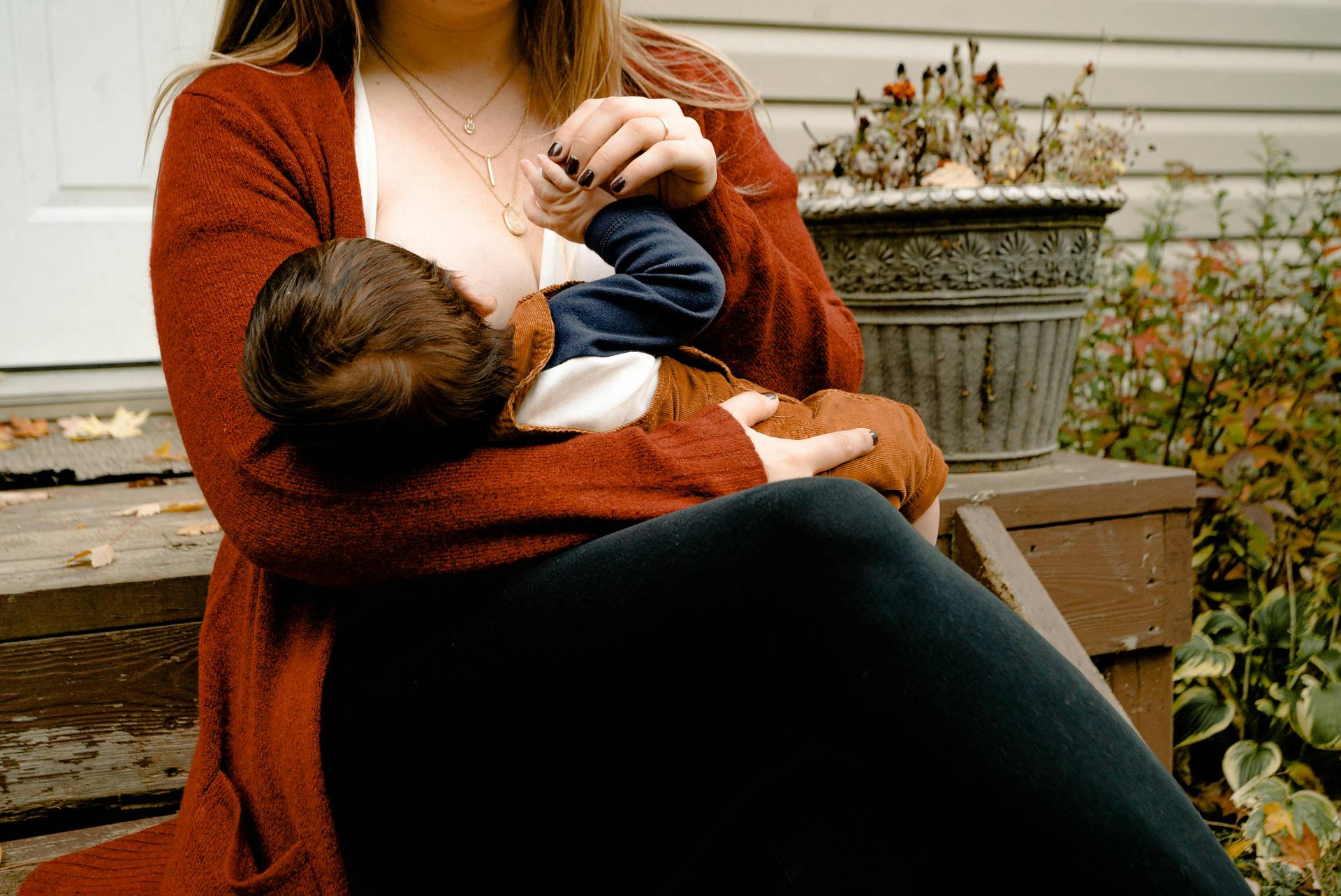
Strong grasp reflex
One of the loveliest one month milestones is that powerful little hand grip.
At this age:
- if you place your finger in your baby’s palm, they will curl their fingers tightly around it
- the grip can feel surprisingly strong
- they may also grasp your clothes, hair, or the edge of a muslin without meaning to
This is still a reflex, not a conscious decision yet. Your 1 month baby is not intentionally “holding your hand”, but you are absolutely allowed to pretend they are. The emotional bit is very real.
You can support this part of baby development at 1 month by:
- letting baby hold your finger during feeds or cuddles
- placing soft, light fabric in their hand to explore (always supervised, never covering their face)
Over the next couple of months, this reflex will gradually turn into more purposeful grabbing.
Vision at 1 month: the world comes into focus
Parents often wonder about baby vision at 1 month. It still looks a bit dreamy and unfocused, but a lot is happening behind those eyes.
Focusing on faces at 20–30 cm
At around 1 month:
- your baby can usually focus best at about 20–30 cm away
- that distance is roughly the space from your face to theirs when you are feeding or holding them
Nature is smart. Your face is exactly where your 1 month old can see best. They may:
- stare at you during feeds
- look like they are studying your features
- pause and look particularly calm when your face is close
If you are thinking “they just look past me or cross-eyed half the time”, that can also be normal at this age, as their eye muscles are still learning to work together. Briefly crossing eyes can be fine. Constant or very pronounced crossing should be checked.
Tracking a slow-moving object
Many one month old babies can:
- briefly follow a slow-moving face or object with their eyes
- track side to side over a short distance
This skill is still very new. To try it, you can:
- Hold your face or a simple high-contrast toy about 20–30 cm from baby’s face.
- Wait until they look at it.
- Slowly move it to one side, then back the other way.
You might only get a small, hesitant eye movement. That’s still a milestone.
If your baby does not track at all by the end of the second month, or if one eye seems to drift constantly, speak to your GP or health visitor for advice.
Preference for faces and high-contrast patterns
When we talk about baby vision at 1 month, we know:
- they see best in high contrast: black and white, bold patterns, strong outlines
- they are especially drawn to human faces
You’ll often see:
- your baby staring at your eyes, hairline, or outline of your face
- interest in bold patterns like stripes or simple black-and-white picture cards
- less interest in soft pastel toys, which may just look blurry at this age
To support visual development:
- give your baby time to study your face without distractions
- place a high-contrast mobile or images near the changing area (but out of reach)
- switch positions in the cot so baby sees the room from different angles (while still following safe sleep guidance)
Hearing at 1 month: tuning into your voice
Baby hearing at 1 month is more advanced than many parents realise. Your baby has been hearing your voice from the womb, and it already means something to them.
Turning toward familiar voices
By 4 weeks, many babies:
- respond to voices, especially those they hear often
- may turn their head slightly toward a familiar sound
- may pause when they hear you speak
The movement might be tiny - a small head tilt, a brief stillness - but it shows they are listening and trying to locate the sound.
Try talking to your 1 month old from one side, then the other, and see if they react. Soft singing, chatting about what you are doing, or reading aloud all count as stimulation.
Calmed by mother’s voice
Many babies are visibly soothed by a parent’s voice. You might notice:
- crying pauses when you start talking or humming
- baby stares at your face while you sing
- they relax more when you use a gentle, sing-song tone
Your voice is one of their greatest sources of comfort. Even if it feels like they are not doing much yet, their brain is busy processing the rhythm and tone of your speech.
Startles at loud sounds
A one month baby will still:
- startle at sudden loud noises
- throw out their arms or legs, or suddenly cry
This startle response ties in with the reflex movements we mentioned earlier. Common triggers:
- a door slamming
- a dropped object
- a dog barking suddenly
If your baby never seems to react to any sounds at all, even very loud ones, contact your health visitor or GP. In the UK, babies usually have a newborn hearing screen early on, but ongoing concerns are worth checking.
Communication at 1 month: cries, cues and tiny sounds
When people ask “what can a 1 month old do?”, they often forget how much they already communicate.
Different cries for different needs
By this point, many parents start to recognise:
- a hungry cry - often rhythmic, escalating, paired with rooting or sucking movements
- a discomfort cry - more grumbly, with squirming or pulling knees up
- an overtired cry - often more whiny or “fussy”, baby may rub face or turn away
You do not have to decode every sound perfectly. Nobody does. But over time, you will start to hear patterns.
This is one of the key 1 month milestones: parents and baby beginning to tune into each other’s signals. It is not just about baby development; it is about your developing bond as well.
Small throaty sounds and early vocalising
Along with cries, your 1 month old might:
- make little throaty noises
- sigh, grunt, snuffle
- sometimes make a brief coo-like sound, although true cooing is more a 6–8 week milestone
These early sounds are the first building blocks of speech. Talk back to them. Pause as if you are having a conversation. It feels a bit silly at first, but your baby is learning that sound can go back and forth.
How to help your 1 month old communicate:
- respond to cries as much as you can - this builds trust
- use a calm, predictable voice, especially around sleep times
- copy their sounds back to them, making it a “chat”
- narrate simple things: “Now I’m changing your nappy. This wipe feels a bit cold, doesn’t it?”
You are not spoiling your baby by responding. At this age, crying is their only clear way to signal a need.
Social development at 1 month: tiny humans, big feelings
Social skills sound like something for toddlers, but newborn development already includes the earliest signs of social connection.
Showing interest in faces
Your 1 month baby is starting to:
- study faces more intently
- calm down when they see a familiar face close up
- look from one part of your face to another
They are not smiling responsively yet in a consistent way (that usually appears around 6–8 weeks), but you may see:
- brief, random smiles in sleep
- the occasional awake smile that might or might not be social
Those early smiles can be a mix of reflex and genuine contentment. Either way, they feel wonderful.
Brief alert and quiet periods
Newborns spend a lot of time feeding or sleeping, but by 1 month old many babies have:
- short awake windows where they are calm, quiet and alert
- moments where they simply gaze at you or look around the room
These “quiet alert” times are golden for bonding and play. They might only last 5–10 minutes, especially if your baby was born a bit early, but they gradually lengthen.
Try to:
- catch these moments for gentle interaction
- avoid overstimulating - a face, a soft voice and maybe one simple object is enough
- stop if baby starts looking away, hiccupping, yawning or fussing: those are often signs they have had enough
Early attempts at eye contact
Eye contact at this age is often very brief:
- a quick lock of eyes, then they look away
- repeated short glances
That is completely normal. Holding long eye contact is hard work for a one month old brain.
You can support this part of baby development at 1 month by:
- getting on baby’s level, so your face is easy to see
- keeping your face close when you talk or sing
- smiling gently and waiting, rather than waving lots of toys around
Those tiny moments of eye contact are building the foundations of emotional connection, trust and later social skills.
How to help your 1 month old: simple everyday ideas
You do not need special equipment to support 1 month development milestones. Your baby’s main needs are still:
- milk
- cuddles
- sleep
- a calm, responsive carer
On top of that, small daily habits make a real difference:
- Talk often: describe what you are doing, comment on what baby might be feeling, sing simple songs.
- Offer short tummy time: several very brief sessions each day when baby is awake and supervised.
- Use your face as the “toy”: exaggerate expressions, raise your eyebrows, pull gentle silly faces.
- Keep stimulation gentle: soft light, one or two simple objects, your voice. Too much noise and clutter can overwhelm a one month old.
- Follow their cues: if baby turns away, arches back, or starts fussing, give them a break.
If you are feeling tired, low, or overwhelmed (which many new parents are), remember that “good enough” parenting is exactly that: good enough. You do not have to create perfect learning experiences. You just have to keep showing up.
Every baby is different: when to relax and when to ask
The range of normal for newborn development is wide. Your one month old might:
- already hold their head up quite strongly
- or barely lift it at all
They might:
- make loads of eye contact and sounds
- or still seem very sleepy and quiet
A few general guidelines:
- Some babies who were born early will reach 1 month milestones a bit later, based on their adjusted age.
- Growth spurts, colds, and even heat can make a usually alert baby more sleepy.
- If you are ever unsure, it is never a waste of time to ask your health visitor, GP or midwife.
Seek advice promptly if:
- your baby seems very floppy or very stiff
- feeding is a constant struggle and they are not gaining weight
- they never respond to sounds
- they never wake of their own accord and are very hard to rouse
Most checks will reassure you that everything is fine. But your peace of mind matters too.
Things to look forward to next month
The next few weeks can bring some truly heart-melting changes. By 2 months, many babies start to:
- give their first real social smiles
- coo more clearly, with softer vowel sounds
- hold their head a little higher during tummy time
- spend longer in those calm, alert periods
- track objects more smoothly with their eyes
So if this first month has felt like survival mode, you are not alone. The second month often brings just enough interaction - those smiles, those little coos - to make the long nights feel a bit lighter.
For now, your 1 month old is already doing far more than it may seem: learning your voice, memorising your face, practising tiny movements, and building the foundations for everything that comes next.
You are both doing a lot of growing. And you are both doing better than you think.
Things to look forward to next month.
We as the developers of the Erby app disclaim any liability for any decisions you make based on this information, which is provided for general informational purposes only and is not a substitute for personal medical advice.