How to Choose the Right Double Stroller for Twins: Side-by-Side, Tandem, Car Seats and Newborn Options
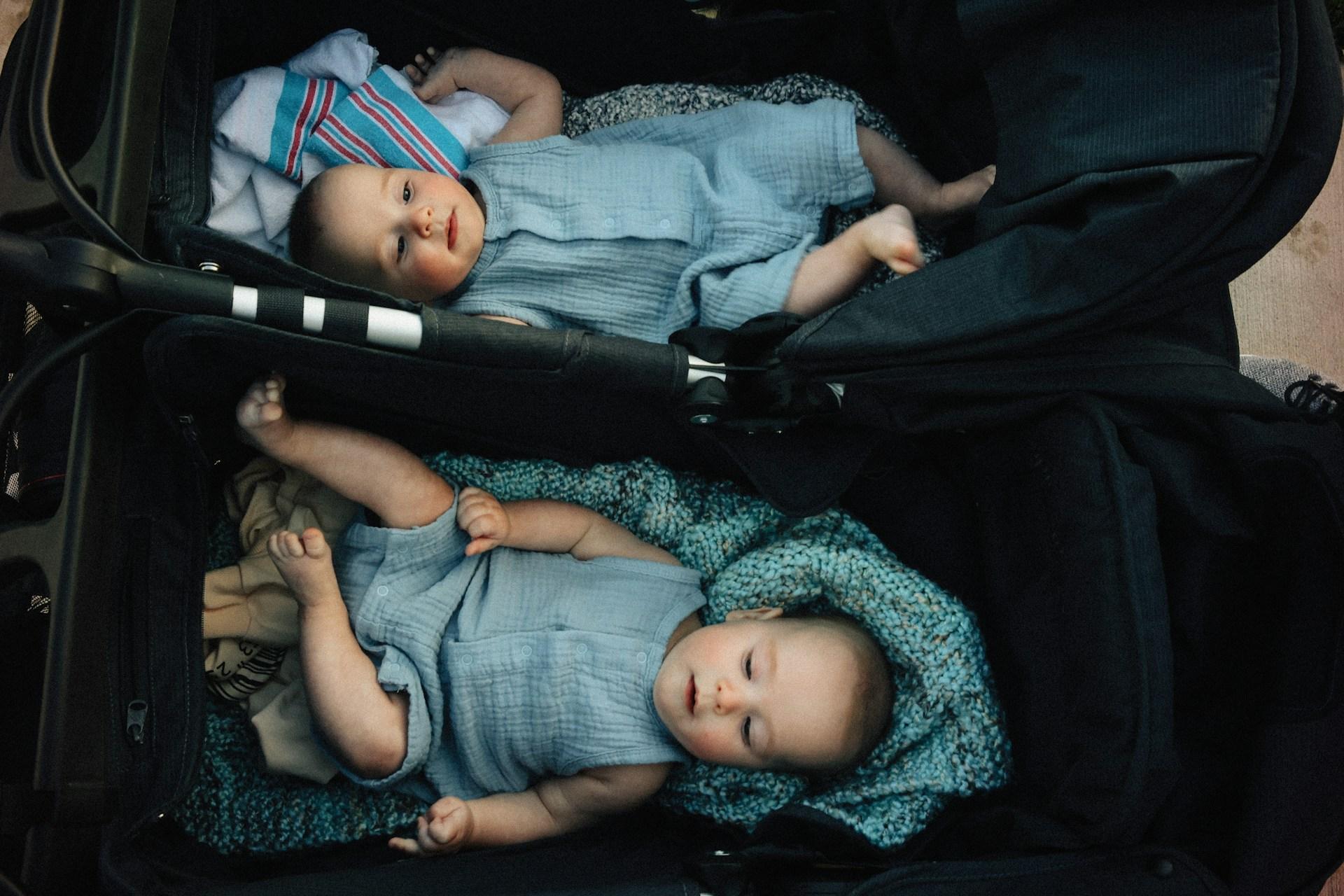
Twins turn ordinary outings into a small logistics exercise. You are not choosing one seat, one buckle and one bag, but two of almost everything, often while recovering from birth and carrying more equipment than you expected. The right double stroller for twins can make nursery runs and supermarket trips manageable. The wrong one may be too wide for your front door, too heavy for the car boot or impossible to lift onto a bus.
There is no single best double stroller for every family. Your transport, home, neighbourhood and children’s ages matter more than a long list of features. Start with how you will actually use it, then compare the details that affect safety and daily comfort.
Stroller types: side by side or tandem?
The biggest decision in the side by side vs tandem debate is not appearance. It is where you need to go.
Side-by-side double strollers
A side-by-side double stroller places the children next to each other. Both usually have the same view, similar access to the parent and matching recline options. That can be helpful as twins grow, particularly when one child becomes frustrated about sitting behind a sibling.
The wider design also tends to feel balanced when turning. Many models offer generous seats, good footwell space and a straightforward fold. Some are suitable from birth with compatible carrycots or infant car seats, while others are intended for children who can sit independently.
The trade-off is obvious: width.
Before buying, measure:
- Your front and back doors, including the narrowest point of the frame
- Lift, hallway and storage cupboard entrances
- The boot opening of your car
- Shop aisles and the gates you use at parks or attractions
- Bus and train access in your area
Do not rely on a product listing that says the stroller is “compact”. Measure the actual width, including wheels and any side hinges. A few centimetres can decide whether you can get through the door without folding it.
A side-by-side model may also be awkward on narrow pavements or older public transport. On the plus side, it is often easier to reach both children, adjust both seats and share snacks without leaning across one child.
Tandem or inline double strollers
A tandem stroller, also called an inline stroller, places one seat behind the other. Its narrow footprint is usually friendlier to doorways, pavements, lifts and shop aisles. For families living in a flat or using public transport, that alone can make it the more practical choice.
Tandem designs vary considerably. Some have stadium seating, with the rear child sitting higher. Others place one seat low at the front and another close to the parent. A newborn carrycot, car seat or reversible seat may be positioned differently depending on the model.
Front-back dynamics take some getting used to. The stroller can feel longer when turning, particularly around tight corners, and the weight distribution changes when one child is heavier or one seat is occupied by an infant car seat. Kerbs may require a firm push down on the handle, so test one in person if you can.
The double stroller fold also differs widely. Some tandem models fold in one piece, while others require seats to be removed first. Check:
- Whether the fold works with both seats attached
- The folded length as well as height and width
- Whether the handle or wheels touch dirty ground in the boot
- If the folded stroller can be lifted by one adult
- Whether it stands on its own when folded
A narrow stroller is not automatically a lightweight stroller. Some tandem models are long and heavy, especially when fitted with two seats or car seat adapters.
When a single stroller and carrier still helps
A double stroller is not the only answer. A single stroller and carrier for twins can be useful for quick trips, especially during the early months. One baby can ride in a properly fitted sling or structured carrier while the other uses the stroller. This can be easier for a short walk to a café, a narrow shop or a doctor’s waiting room.
It also gives you a lighter option when one twin is asleep at home or when an older child walks for part of the journey. Some parents keep the double stroller in the car and use a single stroller for one baby, with the second carrier ready for emergencies.
Follow the carrier manufacturer’s instructions carefully. Newborns need appropriate support, clear airways and a position that does not force the chin onto the chest. A carrier is a useful extra, not a substitute for a safe double setup on longer outings.
Features that matter every day
Weight and handling
Look at the stroller’s weight in its normal configuration, not only the bare frame. Add two seats, rain covers, footmuffs, shopping and perhaps two car seats. The total can become substantial very quickly.
Try pushing it with both seats occupied or loaded with similar weight. Check whether you can:
- Turn it with one hand
- Lift the front wheels over a kerb
- Push uphill without leaning heavily into the handle
- Reverse out of a tight space
- Apply and release the brake without bending awkwardly
A stroller that feels fine in a showroom may be much harder on a slope or uneven pavement. If you will be alone with both babies, handling matters more than a clever accessory package.
Fold and storage
A simple fold wins points every day. If the stroller takes ten minutes and two adults to pack away, it may stay unfolded in the hallway, where it blocks everything.
Ask a shop to demonstrate the fold. Then repeat it yourself. Check whether the seats must face a particular direction and whether the bumper bars, baskets or adapters need to come off. Read the folded dimensions and compare them with your vehicle’s boot, not just its overall storage volume.
Storage baskets are particularly valuable with twins, but do not assume a large basket is easy to access. A low basket may be blocked by a carrycot or rear seat. Look for strong pockets, a secure zipped compartment and enough room for nappies, feeding supplies and a rain cover without overloading the frame.
Wheels: city or all terrain?
For smooth pavements, a lighter city stroller with smaller wheels may be easier to steer and fold. It can work well for shopping centres, paved parks and short urban journeys.
An all terrain double stroller is better suited to gravel, woodland paths, grass and poorly maintained pavements. Larger wheels and suspension reduce jolting, but they usually add weight and bulk. Even an all-terrain model is not designed for every surface, so check the manufacturer’s guidance before taking it onto beaches, steep trails or rough ground.
Think about your usual route. A lightweight city stroller is the better choice if most journeys involve a car and shops. A sturdier model earns its space if you walk daily on uneven paths.
Seat direction and adjustment
Reversible seats let children face you, face forward or sit in different directions, depending on the design. Facing the parent can be reassuring for young babies and makes it easier to check both children. Forward-facing seats give older babies and toddlers a better view of the world.
Not every double stroller offers independent seat adjustment. One twin may be sleeping while the other wants to sit up, so separate recline positions are useful. Check the harness, padding, footrests and maximum weight for each seat. A seat that technically fits two children may become cramped sooner than expected.
Bassinets, carrycots and newborn use
Double stroller bassinet options vary. Some models accept two matching carrycots, while others allow one carrycot and one seat, or require separate adapters. Some seats recline fully and are approved for newborn use, but only if the manufacturer explicitly says so.
Check the stated age, weight and height limits for:
- The stroller seat
- Each carrycot or bassinet
- Infant car seat adapters
- Any newborn insert
- The combined frame and basket load
A carrycot is not automatically suitable for overnight sleep. Use it only as directed. Babies should be placed on a firm, flat surface for sleep, following current advice from your local health service. Never improvise with cushions, additional mattresses or unapproved inserts.
Car seats for twins: buy two safe, compatible seats
Each twin needs their own rear-facing car seat. Never attempt to place two babies in one seat, share harness straps or use a seat beyond its approved capacity. The seats must be installed according to the manufacturer’s instructions and your local road rules.
Many infant seats can click onto a double stroller, but compatibility is not universal. The phrase “travel system ready” does not guarantee that your particular seats will fit. Check double stroller car seat compatibility by confirming:
- The exact car seat brand and model
- Whether one or two adapters are needed
- Whether both seats can be fitted at the same time
- Which seat positions are approved
- Whether the stroller can be folded with adapters attached
- The combined weight limit of the frame and seats
If you already own car seats, shop for a stroller that officially accepts them. If you are buying everything together, test the complete combination before paying.
Your vehicle needs attention too. Two rear-facing seats may fit side by side in the back seat, but the vehicle’s seat width, buckle position, door shape and any third-row access can change the answer. Try both seats in the car, ideally in the positions you will use. Avoid relying on a photo or a general claim that a model fits “most cars”. In some vehicles, the seats may touch in a way the manufacturer does not permit, or one may prevent the other from being installed tightly.
Choose seats with clear labels, usable harnesses and an installation method you can repeat correctly. The best car seats for twins are not necessarily identical, though matching seats can simplify installation and stroller compatibility.
Do not use a car seat that is expired or has been involved in a crash, even if it looks perfect. Replace one with an unknown history. Check recalls, registration and local safety guidance, and do not buy a seat with missing parts, damaged shell, torn harness or unreadable labels.
Budget and secondhand buying
Buying two car seats, a double stroller and accessories can be expensive. Make a list of what you genuinely need before shopping. You may need two infant seats, but you do not necessarily need two cup holders, two changing bags, two organisers and every gadget designed for a singleton.
A stroller frame is often reasonable to buy secondhand, provided you can inspect it properly. Look for:
- A frame with no cracks, bends or loose joints
- Brakes that hold on a slope
- Wheels that spin freely and track straight
- Harnesses and buckles that work
- A fold lock that engages securely
- The correct seats, adapters and instruction manual
- No outstanding safety recall
Be more cautious with fabric that is mouldy, badly torn or impossible to clean. Replacement parts can cost enough to erase the saving.
Car seats are different. Buy one used only when you know its complete history, including whether it has been in a collision, how it was stored and whether every part is original. A car seat from a trusted friend may be acceptable if its date, history and condition are clear. A marketplace listing with “only used a few times” is not enough.
Ergonomics and real-life transport
The handle height should suit the adults who will push the stroller. Your shoulders should remain relaxed, and you should not need to bend forward. If two adults of different heights will use it, look for an adjustable handle and test both positions.
Pushing twins is hard work. Add a kerb, a hill or a full shopping basket and the difference between a well-balanced stroller and a cumbersome one becomes obvious. Take it for a proper test drive, not just a lap around the shop.
Stairs deserve a plan. A double stroller may be too heavy to carry with two babies inside, and you should not leave children unattended while attempting to lift it. If your home has stairs, measure the route and decide whether the stroller will stay downstairs, be carried in parts or be replaced by a carrier for certain trips.
Public transport can be unpredictable. A wide side-by-side may not fit through a bus door or ticket gate, while a long tandem may be difficult to position in a crowded carriage. Check the policies of your local bus and rail operators. Practise using the brake, folding the stroller and securing it before your first busy journey.
Features you can probably skip
Twin life encourages duplicate purchases. Resist some of them.
You may not need two cup holders, two snack trays, two parent organisers or a separate gadget for every seat. One well-placed storage bag can be enough. A universal rain cover may be more useful than two decorative accessories, provided it is approved for the stroller and does not restrict ventilation.
Prioritise safety, fit and daily handling. Everything else is optional.
The right way to choose a double stroller is to match it to your doors, car, routes and strength, then confirm every age and weight limit. Compare a side-by-side and tandem model in person if possible. Test the fold. Install both car seats. Walk it over a kerb.
A stroller that works on paper may fail in your hallway. The best double stroller for twins is the one you can use confidently, safely and often. Always follow the stroller and car seat manufacturer’s instructions, observe their age and weight limits, and comply with the road safety rules that apply where you live.
We as the developers of the Erby app disclaim any liability for any decisions you make based on this information, which is provided for general informational purposes only and is not a substitute for personal medical advice.